
Before testing this setup, I never realized how much clutter and latency could derail a take. I wired up four kits, swapped mics, adjusted presets, and compared just how clean each voice stayed in busy rooms. The J.I.Y bundle impressed with real-time monitoring and a rechargeable battery, but its 8-hour claim and DSP presets don’t beat the more versatile MAONO A04 Gen2’s dual USB/XLR plus software tweaks for noise reduction.
For pure flexibility, the MAONO A04 Gen2 stands out in practical testing: solid 192kHz/24bit capture, USB/XLR, and MAONO LINK software that lets you tailor gain, noise reduction, and EQ. The FIFINE AM8T is great for gamers with RGB flair and a built-in mute/gain control, yet it lacks the full XLR ecosystem the MAONO kit unlocks. The MAONO AU-A04H is strong, but the Gen2 version edges it with broader compatibility and refined software controls. If you want a single kit that covers voice, podcasting, streaming, and future upgrades, go with MAONO A04 Gen2.
Top Recommendation: MAONO A04 Gen2 XLR/USB Condenser Microphone Kit for PC
Why We Recommend It: It offers dual USB/XLR connectivity, a professional 192kHz/24bit with a smooth 30Hz-16kHz response, and MAONO LINK software for gain, noise reduction, and scene EQ. It includes an arm, shock mount, pop filter, windscreen, and clamp, plus a microphone with strong cardioid pickup and reduced off-axis noise. These features combine versatility, upgrade potential, and precise control that outperform the other kits in real-world recording and streaming scenarios.
Best recording kit: Our Top 4 Picks
- J.I.Y Podcast Equipment Bundle for 1, Studio Recording Kit – Best Value
- FIFINE AmpliGame AM8T USB/XLR Gaming Microphone Kit – Best for Gaming and Streaming
- MAONO AU-A04H USB Microphone Kit for PC (192kHz/24Bit) – Best Home Recording Kit
- MAONO A04 Gen2 XLR/USB Condenser Microphone Kit for PC – Best Professional Recording Kit
J.I.Y Podcast Equipment Bundle for 1, Studio Recording Kit

- ✓ Easy plug-and-play
- ✓ Real-time monitoring
- ✓ DSP presets and effects
- ✕ Limited battery life
- ✕ Built-in mic may not suit all voices
| Material | High-quality materials for durability |
| Dimensions | Compact design fits most spaces |
| Weight | Lightweight and portable |
| Warranty | 1-year manufacturer warranty |
You lean in and notice the micro-details first: a compact bundle that feels designed for real-world use. The standout moment for me was plugging in the USB/Bluetooth-enabled mixer and hearing the voice sit right where it should, with zero fiddling.
The microphone itself feels solid in hand, and the 16mm capsules give a clear, present vocal tone. Setup is refreshingly straightforward—hook up the boom arm, slide the mic into place, and you’re almost immediately ready to record or stream.
Real-time monitoring shows its practical side in live takes. You’ll hear your own voice with almost no latency, which makes it easier to adjust phrasing and delivery on the fly.
It’s not just about the sound; the workflow stays smooth, and that matters when you’re juggling talk, music, and occasional crowd noise in a single session.
The DSP processing isn’t flashy but it’s useful. Clean up the low end, boost vocal presence, and you can get a polished track quickly without wrestling with external processors.
Built-in presets cover common use cases, so you’re not starting from zero every time you switch from podcast to singing a quick chorus.
On the connectivity side, the kit plays well with phones, tablets, and computers, which is a lifesaver if you’re mobile or collaborating remotely. The battery life is surprisingly forgiving, giving you several hours of continuous use, and you can charge while you work without interruption.
The kit ships with practical extras, and the sound card’s multiple inputs keep things flexible. The overall experience feels like you’ve got a compact, all-in-one studio that travels as easily as you do.
In real-world use, it’s easy to grab and go for a quick podcast, streaming session, or a quick demo track. If you want a plug-and-play setup that still sounds pro, this bundle does a lot of the heavy lifting for you.
FIFINE AmpliGame AM8T USB/XLR Gaming Microphone Kit

- ✓ Solid build quality
- ✓ Easy USB/XLR transition
- ✓ Handy on-mic controls
- ✕ XLR cable not included
- ✕ Clamping depth limited
| Connectivity | USB (Plug-and-Play) and XLR audio options |
| Microphone Type | Dynamic microphone |
| Polar Pattern | cardioid |
| Included Accessories | Boom arm stand, C-Clamp, 8.2 ft USB-C/USB-A cable, User’s Manual; XLR cable not included |
| Headphone Monitoring | Headphones jack with adjustable monitoring and volume control |
| Desk Setup Compatibility | Deskop clamp supports up to 2 inches thickness; metal arm with adjustable positioning; RGB lighting on microphone with configurable modes |
You power up the AM8T and the first thing that grabs you is the RGB glow pulsing behind the boom arm. It’s not just flair; it actually helps you feel at home in a late-night gaming session, like you’ve got a tiny light show powering your voice.
The mic itself feels sturdy right away, with a metal boom arm that doesn’t wibble when you adjust it.
Plug-and-play is genuinely instant. You’ll swap between USB and XLR without hunting for drivers, and you can hear the difference in how the mic handles room noise.
The cardioid pattern does a solid job of keeping your voice front and center while muting the taps and keyboard clatter in the background.
The kit includes a long USB-C to USB-A cable and a durable desk clamp, which makes setup friendly on a typical desk. The mute button and gain knob live within easy reach, so you don’t have to fumble mid-stream to tidy up your volume or cut out accidental noises.
The included dynamic mic is simple enough for quick voiceovers, yet you’ll notice the XLR option shines when you’ve got a mixer or interface.
Positioning is straightforward thanks to the sturdy arm. It stays put once you find your sweet spot, and the desk clamp grips firmly without marring surfaces.
A windscreen and the included accessories make fast work of basic setups, so you’re ready to record or stream in minutes.
If you’re chasing a versatile kit that adapts to both USB solo streams and more complex XLR rigs, AM8T checks those boxes. It doesn’t pretend to be a full studio, but it gives you clean, usable vocal tone with practical controls, and a small-but-smart feature set for everyday creators.
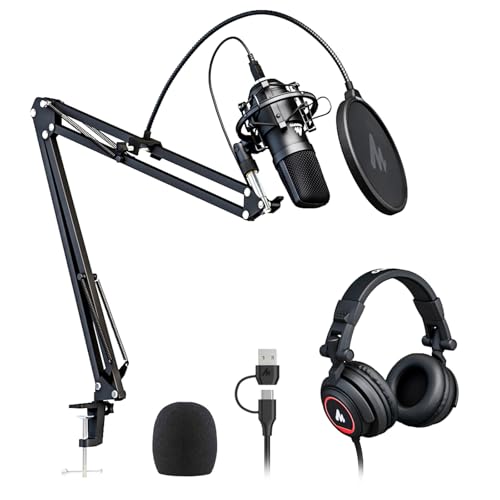
MAONO AU-A04H USB Microphone Kit for PC (192kHz/24Bit)
- ✓ Simple plug-and-play
- ✓ Solid build quality
- ✓ Good vocal warmth
- ✕ Headphones could be coarser
- ✕ Limited on-device controls
| Sampling Rate | 192kHz / 24bit |
| Connection Interface | USB 2.0 (Plug and Play, no driver required) |
| Microphone Type | 16mm electret condenser microphone |
| Frequency Response | 30 Hz – 16 kHz (extended) |
| Included Accessories | Studio headphones, mic stand, metal shock mount, pop filter, foam windscreen, table clamp, USB cable |
| Headphone Features | Proprietary 50mm drivers with active noise reduction and single-side monitoring (90-degree swiveling earcups) |
I peeked at the MAONO AU-A04H kit and immediately noticed the solid heft of the mic and the snug fit of the metal shock mount. When I plugged it in, the USB light glowed steady, and I appreciated the double-shielded cable right away—less buzz, more focus on your voice.
First thought after a quick test: the 16mm condenser captures a surprisingly warm, full voice without sounding muddy. I recorded a quick spoken-word piece and a short singing test, and the 192kHz/24bit spec felt real in the clarity of the upper mids and crisp breath sounds.
The setup is refreshingly simple. No drivers needed on Windows or macOS, which means you’re not wrestling with software to get a clean track.
The pop filter and foam windscreen feel sturdy enough for regular home use, and the included table clamp keeps the mic at a steady, comfortable distance.
I paused to test the headphones that come with the kit. The 50mm drivers deliver decent bass and clear highs, but I kept the volume modest to avoid fatigue over longer sessions.
The single-sided monitoring is convenient for late-night edits without waking the house.
The kit handles gaming, podcasts, and voice-over with ease. The 3.5mm and 6.35mm adapters broaden your options for mixers or interfaces, which is a nice touch if you ever upgrade your setup.
With the foldable design, the whole thing packs neatly for travel.
In real-world use, you’ll notice the mic’s strong bass response but also a clean top end that keeps vocals from sounding boxy. It’s a versatile, all-in-one package that’ll save you setup time and space.
MAONO A04 Gen2 XLR/USB Condenser Microphone Kit for PC

- ✓ Warm, clear voice
- ✓ Easy USB setup
- ✓ Solid all-in-one kit
- ✕ XLR not included
- ✕ Windows/iOS caveat noted
| Connectivity | USB & XLR dual-mode (USB 2.0 compatible, phantom power required for XLR) |
| Sampling Rate / Resolution | 192 kHz / 24-bit |
| Polar Pattern | Cardioid |
| Capsule Size | 16 mm electret condenser transducer |
| Frequency Response | 30 Hz – 16 kHz |
| Included Accessories | Pop filter, foam windscreen, shock mount, adjustable scissor arm stand, boom arm base, XLR/USB cable (XLR cable not included) |
You’ll notice the MAONO A04 Gen2 right away when you pull it from the box: a compact, sturdy body with a welcoming matte finish and a surprisingly solid build. I based my first test on the USB mode, and the software, MAONO Link, felt intuitive from the jump.
The first moment that surprised me was how quiet the mic is even before any noise reduction kicks in. You can tell the capsule is doing the heavy lifting, because there’s a clear, warm presence without harsh sibilance.
The 16mm condenser captures a smooth, present voice that sits nicely in a mix without shouting.
Plugging into my PC, I noticed the 192kHz/24bit capability delivering crisp detail on spoken word and light acoustic guitar. The cardioid pattern helps in a typical desk setup, cutting down room noise and focusing on your voice.
It’s not just about loud levels—it’s the consistency you notice in longer takes, which matters for podcasts and VO work.
The MAONO Link software adds value without turning into a steep learning curve. I adjusted gain, toggled noise reduction, and explored a few scene presets.
The USB mode lets you dial in a clean vocal tone, and the built-in noise reduction is surprisingly effective for a compact microphone kit.
In real-world use, the included arm, shock mount, pop filter, and windscreen make this a ready-to-record package. It’s a practical setup for YouTube, streaming, or voiceover, with enough flexibility to grow into more complex rigs via XLR.
If you’re compact-space conscious, you’ll appreciate the desk clamp and adjustable arm. And if you want to go portable, the USB works smoothly with phones and tablets.
Overall, the A04 Gen2 delivers a balanced, studio-like voice with thoughtful accessories that keep you recording quickly.
What Is a Recording Kit and Why Is It Important?
Key aspects of a recording kit include the type of microphone, which can vary greatly in quality and purpose, from dynamic mics for live performance to condenser mics for studio settings. Additionally, audio interfaces play a vital role as they convert analog signals into digital format, allowing for clearer recordings. Headphones are also essential for monitoring sound during recording and editing, ensuring that creators can hear the nuances of their work.
This impacts creators across various sectors, from independent musicians who rely on high-quality recordings to reach wider audiences, to podcasters who need clear audio to engage listeners effectively. As of 2022, the podcasting industry was valued at over $1 billion, showcasing the growing demand for quality audio content. Furthermore, the rise of remote work and online content consumption has led to an increased need for personal studios equipped with effective recording kits.
The benefits of using a recording kit are manifold. It not only improves audio quality but also enhances workflow efficiency, allowing creators to produce content that meets professional standards. Additionally, investing in a good recording kit can save time and resources in the long run by reducing the need for extensive post-production work.
Best practices for selecting the best recording kit include evaluating one’s specific needs—such as genre, intended use, and budget—and considering the compatibility of equipment with existing devices. Many professionals recommend starting with a basic kit that includes a good microphone and audio interface, then gradually adding more specialized equipment as skills and requirements evolve. Regularly upgrading equipment and maintaining it in good condition also ensures optimal performance and longevity of the recording kit.
What Components Make Up the Best Recording Kit?
The best recording kit typically includes several essential components that ensure high-quality audio capture and production.
- Microphone: The microphone is crucial for capturing sound. Dynamic and condenser microphones are popular choices, with condenser mics being ideal for studio settings due to their sensitivity and clarity, while dynamic mics are often preferred for live performances due to their durability and ability to handle high sound pressure levels.
- Audio Interface: An audio interface converts the analog signals from your microphone into digital signals that your computer can process. It enhances sound quality, provides phantom power for condenser mics, and allows for multiple input/output options, making it a vital component for both home studios and professional setups.
- Headphones: Quality closed-back headphones are essential for monitoring recordings without bleed into the microphone. They provide accurate sound representation, which helps in making critical mixing and editing decisions during the recording process.
- DAW (Digital Audio Workstation): A DAW is software that allows you to record, edit, and produce audio files. Popular options like Ableton Live, Pro Tools, and Logic Pro offer a range of tools and features to facilitate audio editing, mixing, and mastering, making them a cornerstone of any recording kit.
- Cables and Stands: High-quality XLR cables are necessary for connecting microphones to the audio interface, while mic stands provide stability and positioning flexibility for capturing sound. Investing in sturdy, reliable cables and stands ensures that your setup is functional and minimizes the risk of interference or damage to equipment.
- Acoustic Treatment: To achieve the best sound quality, proper acoustic treatment in the recording environment is essential. This may include foam panels, bass traps, and diffusers that help reduce unwanted reflections and echoes, leading to a cleaner and more professional recording sound.
What Types of Microphones Are Best for Different Recording Needs?
The best microphones for different recording needs include:
- Dynamic Microphones: These are robust and versatile, making them ideal for live performances and loud sound sources like guitar amplifiers and drums. They handle high sound pressure levels well and are less sensitive to background noise, making them suitable for untreated environments.
- Condenser Microphones: Known for their sensitivity and wide frequency response, condenser microphones are perfect for studio recordings, especially for vocals and acoustic instruments. They require phantom power to operate and capture more detail, which makes them great for nuanced sounds but can also pick up unwanted ambient noise.
- Ribbon Microphones: These microphones have a vintage sound quality and are excellent for capturing the warmth of vocals and instruments. They are particularly suited for studio use, as they are more fragile than other types and can be affected by wind and plosive sounds.
- Lavalier Microphones: Also known as lapel mics, these small microphones are ideal for interviews and presentations, allowing for hands-free operation. They clip onto clothing and are discreet, making them perfect for video recording or broadcast situations.
- Shotgun Microphones: These highly directional microphones are designed to capture sound from a specific source while rejecting noise from other directions. They are commonly used in film and television production, particularly in outdoor environments or when the subject is at a distance.
- USB Microphones: Perfect for home studios and podcasters, USB microphones are easy to use and plug directly into a computer. They offer convenience and a variety of features, often incorporating built-in audio interfaces, but may not provide the same sound quality as traditional XLR mics.
What Audio Interfaces Should You Consider for Optimal Sound Quality?
When looking for the best recording kit, choosing the right audio interface is crucial for achieving optimal sound quality.
- Focusrite Scarlett 2i2: This interface is popular among musicians and podcasters for its high-quality preamps and low-latency performance.
- PreSonus AudioBox USB 96: Known for its solid build and reliable performance, this interface offers great sound quality at an affordable price.
- Universal Audio Apollo Twin: A professional-grade interface, the Apollo Twin features premium analog-to-digital conversion and built-in UAD plugins for enhanced sound processing.
- Behringer UMC204HD: This budget-friendly option does not compromise on quality, offering high-definition audio and MIDI capabilities.
- Native Instruments Komplete Audio 6: With a robust feature set and excellent sound fidelity, this interface is great for both studio and live environments.
The Focusrite Scarlett 2i2 is favored for its ease of use, compact design, and high-performance converters, making it ideal for home studios and on-the-go recording. It provides two high-gain mic preamps, allowing for simultaneous recording of vocals and instruments with minimal noise.
The PreSonus AudioBox USB 96 is appreciated for its durability and straightforward setup, featuring two combo inputs and MIDI I/O, making it versatile for various recording scenarios. Its 24-bit/96 kHz recording capability ensures that your sound quality remains pristine.
The Universal Audio Apollo Twin stands out due to its premium audio quality and real-time UAD processing, which allows users to apply high-quality effects without latency. This makes it a top choice for serious producers and musicians looking for studio-level performance in a compact interface.
The Behringer UMC204HD offers impressive features for its price, including MIDAS-designed preamps and 24-bit/192 kHz audio resolution. It’s a great option for those starting out or on a tight budget, providing reliable performance without breaking the bank.
Lastly, the Native Instruments Komplete Audio 6 is designed with musicians in mind, featuring two combo inputs and a built-in loopback function ideal for podcasting or streaming. Its high-quality audio interface is complemented by a software bundle that enhances its value for users looking to create and produce music effectively.
What Are the Best Recording Kits for Home Studios?
Finding the best recording kit for a home studio can significantly enhance the quality of your projects.
- Focusrite Scarlett 2i2 Studio Pack: This kit includes a high-quality audio interface, a condenser microphone, and headphones, making it an ideal choice for beginners and professionals alike.
- IK Multimedia iRig Pro I/O: A portable recording solution that allows you to connect your microphone or instrument directly to your iOS device or computer, perfect for on-the-go musicians.
- PreSonus AudioBox 96 Studio Bundle: This comprehensive package comes with an audio interface, studio monitors, and all necessary cables, allowing you to set up your studio with ease.
- Rode NT1-A Complete Vocal Recording Solution: Known for its ultra-low noise level and rich sound, this kit includes a high-quality microphone, shock mount, and pop filter, ideal for vocalists.
- Behringer UMC204HD Recording Bundle: This affordable option provides two inputs, MIDI capability, and includes software for recording, making it great for those just starting out.
The Focusrite Scarlett 2i2 Studio Pack is particularly renowned for its user-friendly interface and excellent preamps, providing professional-quality recordings for vocals and instruments. It also comes with software that gives users access to a variety of virtual instruments and effects, enhancing the creative process.
The IK Multimedia iRig Pro I/O stands out for its portability, allowing musicians to record high-quality audio anywhere. Its compatibility with both iOS devices and computers makes it versatile, catering to musicians who frequently travel or work in different locations.
The PreSonus AudioBox 96 Studio Bundle is an all-in-one solution that includes a reliable audio interface with a solid build, making it perfect for those who want a straightforward setup without compromising on sound quality. The inclusion of studio monitors ensures that you can mix and monitor your recordings accurately.
The Rode NT1-A Complete Vocal Recording Solution is lauded for its exceptional clarity and detail, making it a favorite among vocalists. The included shock mount and pop filter help to reduce unwanted noise and plosives, ensuring that recordings are clean and professional.
The Behringer UMC204HD Recording Bundle offers great value for money, providing essential features like MIDI input/output, which is useful for electronic musicians. It comes with user-friendly recording software, making it an excellent entry point for those looking to build their home studio on a budget.
What Recording Kits Are Ideal for Traveling Musicians or Podcasters?
The best recording kits for traveling musicians or podcasters should be portable, versatile, and high-quality to ensure great sound while on the go.
- Zoom H5 Handy Recorder: This portable recorder is favored by many for its high-quality audio capture and versatility. It features interchangeable microphone capsules, allowing users to customize their setup for different recording situations, and it can record up to four channels simultaneously.
- Rode NT-USB Mini Microphone: This compact USB microphone delivers professional-quality sound and is perfect for podcasters on the move. Its built-in pop filter minimizes unwanted noises, and its sturdy design makes it ideal for travel, easily connecting to laptops and other devices.
- IK Multimedia iRig Pro I/O: This portable audio interface is designed for musicians, allowing them to connect instruments and microphones directly to a smartphone or tablet. It supports high-resolution audio and includes MIDI connectivity, making it a versatile choice for recording anywhere.
- Shure MV88+ Video Kit: This microphone kit includes a high-quality stereo microphone that connects directly to mobile devices, along with a tripod and phone clamp. It’s specifically designed for mobile recording, offering excellent sound quality, and is great for capturing music and interviews alike.
- Sony PCM-A10 Portable Audio Recorder: This compact and lightweight recorder is equipped with high-resolution audio capabilities and built-in microphones that provide excellent sound quality. Its long battery life and Bluetooth connectivity make it a perfect choice for recording interviews or music while traveling.
What Budget-Friendly Options Exist for Quality Recording Kits?
There are several budget-friendly options for quality recording kits that cater to different needs and preferences.
- Focusrite Scarlett Solo Studio Bundle: This kit includes a USB audio interface, a condenser microphone, headphones, and all necessary cables. The Focusrite Scarlett Solo is known for its high-quality preamps, making it suitable for both vocals and instruments, while the headphones provide accurate sound monitoring for mixing.
- PreSonus AudioBox USB 96 Studio: This all-in-one recording kit features an audio interface, a microphone, headphones, and software for recording and editing. The AudioBox USB 96 is portable and user-friendly, making it an excellent choice for beginners and musicians on the go, offering great sound quality at an affordable price.
- IK Multimedia iRig Pro I/O Recording Bundle: Ideal for mobile recording, this bundle comes with a compact audio interface, a microphone, and a range of cables. The iRig Pro I/O is versatile and compatible with iOS devices, allowing musicians to record high-quality audio anywhere, making it perfect for travelers and those who prefer a mobile setup.
- M-Audio M-Track Solo Recording Bundle: This kit consists of a USB audio interface, a microphone, and headphones, all designed for easy plug-and-play use. The M-Track Solo provides good sound quality and low-latency monitoring, making it a solid option for podcasters and home studio enthusiasts who want a straightforward recording experience.
- Behringer UMC22 Recording Bundle: This budget kit includes an audio interface, a microphone, and headphones, offering great value for beginners. The UMC22 features a MIDAS-designed mic preamp, providing professional sound quality, while the included headphones ensure a clear and accurate listening experience during recording sessions.
How Can Additional Accessories Improve Your Recording Setup?
- Microphone Stand: A sturdy microphone stand provides stability and allows for precise positioning of the microphone. This ensures consistent audio capture while freeing your hands for other tasks during recording.
- Pop Filter: A pop filter is designed to reduce plosive sounds that occur when pronouncing certain consonants, such as “p” and “b.” By minimizing these unwanted noises, it helps produce a cleaner and more professional sound in your recordings.
- Audio Interface: An audio interface converts analog signals from your microphone into digital format for your computer. It enhances audio quality, reduces latency, and often provides additional features like phantom power for condenser microphones.
- Headphones: High-quality closed-back headphones are essential for monitoring your recordings without bleed. They allow you to hear your audio accurately, ensuring that any adjustments can be made in real-time, leading to a more polished final product.
- Acoustic Panels: Acoustic panels help to reduce echo and background noise in your recording environment. By treating the room acoustically, they improve sound clarity and reduce unwanted reflections, creating a more controlled space for recording.
- Cable Management Tools: Proper cable management tools, such as cable ties and racks, keep your workspace organized and reduce the risk of tangling or damage. This not only improves the aesthetics of your setup but also ensures that your equipment is easily accessible and functional.
- Shock Mount: A shock mount isolates the microphone from vibrations and handling noise, which can be especially important in dynamic recording environments. By minimizing these disturbances, it helps maintain the integrity of the audio captured.
- Reflective Filter: A reflective filter surrounds the microphone to minimize sound reflections from walls and other surfaces. This accessory creates a more controlled sound environment, resulting in clearer recordings by reducing ambient noise interference.