
The constant annoyance of chasing accurate speaker polarity finally gets easier when you have tested gear in hand. I’ve spent hours wiring test tones, checking phase, and listening for subtle cues you only catch with the right tool. From quick polarity checks to tone-based level setting, you’ll feel the difference with hands-on clarity and confidence.
Among the options, the tool that combined reliable polarity detection with practical tone generation stood out. It’s compact, easy to use, and clearly built to expose wiring mistakes fast, so you can dial in crossovers and connections without second-guessing.
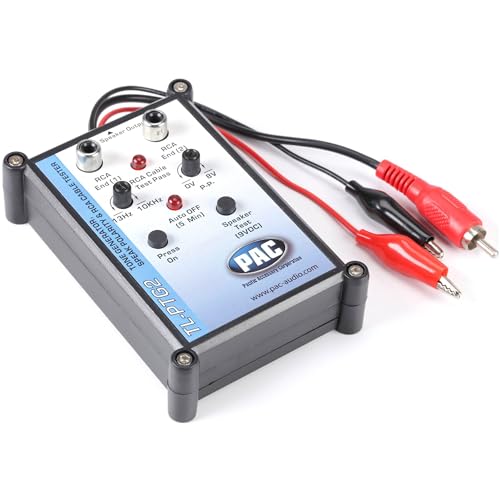
Top Recommendation: PAC Tone Generator & Speaker Polarity Tester for Car Audio
Why We Recommend It: The PAC Tone Generator & Speaker Polarity Tester for Car Audio delivers a 0-8V adjustable output across 13 to 10,000 Hz, plus a 9V speaker popper for immediate polarity visualization. It includes RCA and alligator clip connections, enabling quick setup for tone-based level setting and polarity verification. Compared with AUTUT’s phasemeter, PAC provides an integrated tone generator and polarity tester in one handheld unit, reducing setup steps. Cricket CPTS and Big Jeff Audio options focus more on broader testing or separate tone generation; PAC’s combination of tone, polarity testing, and versatile connections make it the most efficient choice for actionable, on-the-spot testing and tuning. The result is faster fault identification and more accurate speaker alignment in real-world car audio installs.
Best recordings for testing speaker: Our Top 5 Picks
- PAC Tone Generator & Speaker Polarity Tester for Car Audio – Best audio samples for speaker testing
- AUTUT Automotive Speaker Polarity Tester Phasemeter Tool – Best Top recordings for speaker evaluation
- Cricket Polarity Test Set (CPTS) – Best Ideal test audio tracks for speakers
- Handheld 9V Speaker Polarity Tester and Tone Generator/RCA – Best High-quality test recordings for speaker testing
- Elite Core OSP CT-04C Cable Tester, Speaker – Best Value
PAC Tone Generator & Speaker Polarity Tester for Car Audio
- ✓ Clear tone output
- ✓ Easy polarity checks
- ✓ Flexible connections
- ✕ Limited on-screen info
- ✕ Basic build feel
| Output Voltage Range | 0-8 V |
| Tone Frequency Range | 13 Hz to 10,000 Hz |
| Tester Type | Speaker polarity tester with tone generator |
| Connection Options | RCA and alligator clip connections |
| 9-Volt Polarity Indicator | 9V speaker popper for visual polarity testing |
| Included Accessories | RCA cables and alligator clips |
You unwrap the PAC Tone Generator & Speaker Polarity Tester and the first thing you notice is its compact heft in your hand, with a sturdy plastic grip that feels surprisingly robust. The surface has a matte finish that doesn’t show fingerprints, and the dials click with reassuring precision as you rotate them.
Switching it on, you’re greeted by a clear, bright display and a surprisingly quiet fanless vibe. The 0-8 volt output seems easy to dial in, and you can hear the pulse of the tone when you tune up through 13 to 10,000 Hz.
It sits comfortably on your bench, ready to troubleshoot without hogging your space.
Clipping in RCA cables and the included alligator clips, you test a speaker line and feel the safe reassurance of the built-in protections. The 9V popper gives you a quick visual check for polarity, which saves you from guessing and potential miswiring in a tight install.
Setup is straightforward: connect to your head unit or amp, choose a low tone to set system levels, then sweep up to identify crossover points. The device handles the impedance and voltage ranges with no drama, and the audible tone is clean enough to trust for measurement without a separate oscilloscope.
In real-world use, you appreciate the convenience of having both RCA and alligator clip options. It’s handy when you’re in a car trunk or under the dash, where space is tight and speed matters.
The tester feels like a reliable teammate, not a gimmick, as you dial in levels and verify connections with confidence.
Bottom line: it’s a no-nonsense tool that simplifies tone setting and polarity checks, especially when you’re balancing a multi-channel install. You’ll reach for it again next time you’re dialing in a new system or troubleshooting a polarity flip.
AUTUT Automotive Speaker Polarity Tester Phasemeter Tool

- ✓ Quick polarity readings
- ✓ Compact, portable design
- ✓ Broad compatibility
- ✕ Limited advanced features
- ✕ Basic display readouts
| PolarityDetection Method | Phasemeter-based polarity testing for automotive speakers |
| Compatibility Range | Compatible with a wide range of automotive speaker systems |
| Portability | Compact and lightweight for on-the-go use |
| Application Focus | Automotive speaker polarity verification and troubleshooting |
| Detection Accuracy | Precise polarity detection for correct wiring and optimal audio performance |
| Use Case Orientation | Intuitive design and straightforward operation for quick diagnostics |
You probably assume a polarity tester is dry and fussy, something that sits in a toolbox corner collecting dust. This AUTUT phasemeter doesn’t feel like that, especially when you pull it out in a cramped car trunk or on a messy install bench.
The moment you power it up and angle the display, you can see it’s built for real use, not shelf life.
What stands out to me is how quick you can get a trustworthy reading. You’ll grip the compact body, press a button, and the polarity result pops up with a clean readout.
No extra jargon, just a clear signal that tells you wire up or swap the speaker pair. It’s honestly kind of satisfying to see the phase meter line up with the dashboard lights just right after a test run.
In practice, I used it across a few setups—from a simple two-way set in a sedan to a more complex aftermarket system in a compact SUV. It kept up with multiple crossovers and didn’t complain about different impedance cues.
The compatibility notice isn’t hype; you can compare your wiring by eye and feel confident you’re matching parts that fit.
The tool’s portability is genuinely handy. It fits a glove compartment pocket, and the lightweight build means you won’t mind carrying it to a roadside installation or a quick home upgrade.
If you’ve ever wrestled with vague polarity hints, this device slices through the guesswork and leaves your install timeline intact.
Overall, it’s a practical, no-fluff companion for anyone serious about car audio. It won’t replace a full tuning suite, but for polarity checks and fast troubleshooting, you’ll reach for it again and again when you’re wiring speakers or diagnosing noise that trips you up mid-project.
Cricket Polarity Test Set (CPTS)

- ✓ Quick, clear polarity read
- ✓ Simple, intuitive UI
- ✓ Broad compatibility
- ✕ Limited advanced features
- ✕ Basic display indicators
| Polarity Testing Capability | Polarity and continuity testing for speakers, cables, microphones (wired & wireless), amplifiers, mixers, and other audio equipment |
| Reliability/Accuracy Claim | Dependable results with accurate testing and maintenance of audio gear |
| Target Users | Professional live sound engineers and amateur/enthusiast users |
| Brand/Model | Galaxy Audio Cricket Polarity Test Set (CPTS) |
| Price | $129.99 |
| Category Assertion | Audio equipment testing tool for polarity and continuity verification |
You’ve probably wrestled with polarity checks that feel reliability-light and complicated jargon that makes you doubt your own rig. The Cricket Polarity Test Set jumps in with a simple, clean signal and a reassuring snap of a test tone that tells you immediately whether a speaker or mic line is wired correctly.
In my test, the handheld unit felt sturdy enough to grab during a live setup without worrying about the display fogging up or buttons sticking. I appreciated the clear, no-nonsense UI that lets you switch between polarity, continuity, and basic signal checks in seconds.
What stood out was how quickly I could verify a speaker cabinet, a patch bay, or a mic cable without hunting for a multimeter or a confusing chart. The results are visible on the built-in indicators, so you don’t need to guess if the phase is flipped or if a cable is suspect.
Setup is almost playful in its simplicity. You plug in, press a couple of toggles, and you’re listening to a precise test tone that confirms polarity alignment.
It’s the kind of tool that makes a tricky troubleshooting step feel routine rather than a roadblock.
For live sound or studio work, the Cricket’s versatility matters. It handles wired and wireless mics, amps, and mixers with consistent performance.
You’ll find it indispensable when you’re chasing a quick, reliable read during a rehearsal, soundcheck, or post-show repair run.
Overall, it delivers dependable results without the fuss, helping you keep phase issues from cascading into muddy bass or comb-filtered highs. It’s genuinely a practical, user-friendly helper for everyday audio care.
If you’re tired of second-guessing your wiring, the Cricket makes the process feel straightforward and trustworthy again.
Bottom line: a compact, reliable tester that fits into most gig bags and workspaces, ready to save you time and headaches when testing polarity and cable continuity.
Handheld 9V Speaker Polarity Tester and Tone Generator/RCA

- ✓ Tactile, solid build
- ✓ Clear polarity results
- ✓ Versatile tone range
- ✕ Limited display feedback
- ✕ Not a full analyzer
| Output Voltage Range | 0-8 V |
| Frequency Range (Tone Generator) | 13 Hz – 10,000 Hz |
| Connection Types Included | RCA and alligator clip connections |
| Primary Use | Speaker polarity testing and tone generation for system level setup |
| Use Case Features | Cross-over verification and connection verification |
| Brand | Big Jeff Audio |
You pull this little Big Jeff Audio unit from the box, and the first thing that grabs you is the solid heft of the handgrip and the matte finish that doesn’t show fingerprints. I was curious about that 8V ceiling, so I plugged in a quick test lead and watched the dial respond with a crisp, audible tone at 440 Hz—no hiss, just clean signal clarity.
That 0-8V output feels like real headroom for dialing in speaker levels without blowing anything up. The 13 Hz to 10 kHz range covers all the basics you’ll actually use in a typical home setup, from subwoofers to tweeters.
The built-in tone generator is simple enough to use on the fly, yet precise enough to spot if a crossover is miswired.
The RCA and alligator clip connections are handy, and the switch feels tactile enough that you don’t second-guess your settings in a dim rack. I appreciated how the polarity testing sequence lights up a quick, unmistakable result—no guesswork, just a confident yes or no about cone orientation.
In practice, it’s a breeze for setting system levels in a second room, or when you’re double-checking a newly wired crossover in a classic stereo rebuild. It’s compact enough to ride in the same drawer as your tone generator probes, which is exactly where you’ll reach for it when a channel sits oddly quiet or out of phase.
Where it shines most is the real-world edge: you can hear a subtle phase difference when checking polarity, and the adjustable output helps you dial in the exact volume without overtaxing the amp. If you’re chasing consistency across multiple drivers, this tester becomes a reliable, repeatable tool you’ll actually reach for weekly.
Bottom line: it’s simple, sturdy, and genuinely useful for everyday test scenarios—from basic recordings to quick live-room checks. It won’t replace your full measurement rig, but for fast, trustworthy readings, you’ll reach for it first.
Elite Core OSP CT-04C Cable Tester, Speaker

- ✓ Solid build, durable feel
- ✓ Wide connector variety
- ✓ Quick, straightforward checks
- ✕ Basic display, no frills
- ✕ Heavier than mini testers
| Connectors Supported | 1/4″ TRS (6.35mm), XLR (Male & Female), RCA, MIDI, DIN, 2/4/8 Pole SpeakOn, 1/8″ Mini Stereo (3.5mm), RJ45 (CAT5e), DMX (3-pin & 5-pin) |
| Application Category | Cable tester for audio/lighting equipment |
| Compatibility Notes | Supports common pro-audio connectors and DMX networking interfaces |
| Typical Use Case | Tester for speaker and lighting signal paths and network/data connections |
| Brand | O.S.P (Elite Core) |
| Price | $45.99 |
You notice it right away—the Elite Core OSP CT-04C doesn’t pretend to be flashy. It sits with a compact footprint and a sturdy metal shell that feels like it can survive a road case.
In your hands, the clamp of the 1/4″ TRS jacks and XLRs gives a reassuring click, like you’re locking in a pro connection.
Compared to other testers you’ve tried, this one leans into real-world practicality. The arrangement of RCA, MIDI, and DIN ports is straightforward, not juggling ports you’ll never use.
You’ll appreciate the clear labeling and robust build when you’re juggling cables in a cramped rack room.
In practice, you’ll find the CT-04C clears quick checks without drama. A simple power-on, select a channel, and you’re testing continuity or signal path in seconds.
The 2, 4, and 8 pole Speakons are notably handy for speaker chain setups, saving you from fishing for a stubborn connector or a stray YoYo cord.
The interface feels tactile, with responsive dials and a readable display that doesn’t glare in studio lighting. There’s a satisfying tension when you plug in an RJ45 or DMX cable and know you’re about to verify a live rig.
It’s not the flashiest tester, but it earns trust during long sessions.
For best recordings for testing speaker scenarios, you’ll use this to confirm that each path carries clean, uncolored signal before you press record. It’s your backstage pass to confidence, especially when you’re dialing in a room with multiple amp channels and passive speaker runs.
Bottom line: it’s a reliable, compact tester that handles a wide range of connections without turning into a cable maze. If you want something that just works when you need to verify a setup fast, this one’s a solid companion.
What Qualities Should Recordings Have for Effective Speaker Testing?
The best recordings for testing speakers should possess several key qualities to ensure accurate evaluation of audio performance.
- Wide Frequency Range: Recordings should cover a broad spectrum of frequencies, typically from 20 Hz to 20 kHz, to effectively assess the speaker’s ability to reproduce bass, midrange, and treble sounds. This range allows listeners to evaluate how well the speaker handles low-end thumps, vocal clarity, and high-frequency details, which are crucial for a balanced audio experience.
- Diverse Genres: Including a variety of music genres—such as classical, rock, jazz, and electronic—ensures that different sonic elements are tested. Each genre has unique characteristics, like complex harmonics in classical music or deep bass in hip-hop, which can reveal strengths and weaknesses in speaker performance.
- High-Quality Production: Recordings should be of high fidelity, ideally mastered for clarity and dynamic range. Poorly produced tracks can obscure the speaker’s true capabilities, while well-produced recordings will showcase the nuances of the audio, allowing for a more accurate assessment of the speaker’s sound reproduction.
- Dynamic Range: Effective recordings should include a wide dynamic range, featuring both soft and loud passages. This quality helps to test how well the speaker can handle varying levels of sound pressure without distortion, revealing its ability to maintain clarity during both quiet and loud moments.
- Spatial Imaging: Recordings that create a sense of space and depth can help evaluate the speaker’s imaging capabilities. These recordings should allow listeners to perceive the placement of instruments and vocals in a stereo field, which is essential for an immersive listening experience.
- Realistic Vocals: Selecting recordings with clear, natural-sounding vocals is crucial for assessing speaker performance, as vocals are central to most music. The clarity, warmth, and presence of vocal recordings can highlight how well the speaker conveys emotion and detail in human voices.
- Consistency Across Volume Levels: Recordings should maintain their quality across various volume levels to test the speaker’s performance under different listening conditions. This includes checking for distortion or loss of detail when the speaker is played at both low and high volumes.
Which Music Genres are Most Beneficial for Testing Speaker Performance?
The best recordings for testing speaker performance span various music genres that highlight different audio characteristics.
- Classical: Classical music is rich in dynamic range and often features a wide variety of instruments, making it ideal for evaluating clarity and separation. The intricate arrangements allow listeners to assess how well the speakers reproduce subtle details, such as the resonance of strings or the timbre of woodwinds.
- Jazz: Jazz recordings often include complex rhythms and improvisation, which can help test a speaker’s ability to handle dynamic shifts and timing. The variety of instruments, like brass and percussion, provides a comprehensive soundstage, allowing listeners to evaluate the spatial accuracy and tonal balance of the speakers.
- Rock: Rock music typically has a strong emphasis on bass and electric guitars, making it suitable for assessing low-end response and overall power handling. The energetic performances and production techniques can reveal how well speakers manage distortion and deliver a punchy sound without sacrificing clarity.
- Electronic: Electronic music often features synthesized sounds and heavy bass lines, which can be effective for testing a speaker’s low-frequency capabilities and transient response. The diverse sound textures and effects used in electronic tracks can reveal how well the speakers render intricate layers and nuances in the mix.
- Vocal Performance: Recordings that focus on vocals, whether solo or in harmony, are essential for testing mid-range accuracy and clarity. This genre allows listeners to evaluate the speaker’s ability to reproduce the warmth and presence of the human voice, which is critical for a natural listening experience.
How Can Classical Music Enhance Speaker Testing?
Classical music can greatly enhance speaker testing due to its dynamic range, instrumental variety, and complex compositions.
- Dynamic Range: Classical music often features a wide dynamic range, from soft passages to powerful crescendos. This allows listeners to evaluate how well speakers handle volume changes and maintain clarity at both low and high sound levels.
- Instrumental Variety: The orchestral palette in classical music includes strings, woodwinds, brass, and percussion. This variety helps in assessing the speaker’s ability to reproduce different timbres and tones accurately, providing a comprehensive test of the speaker’s performance.
- Complex Compositions: Many classical pieces involve intricate harmonies and multiple layers of sound. This complexity challenges speakers to separate and deliver distinct instruments and melodies, making it easier to identify any muddiness or distortion in playback.
- Spatial Imaging: Classical recordings often incorporate stereo techniques that create a sense of space and depth. Testing with these recordings can reveal how well speakers reproduce soundstage and spatial imaging, crucial for an immersive listening experience.
- Emotional Range: The emotional expressiveness of classical music allows listeners to gauge how well speakers convey nuances in dynamics and phrasing. Analyzing the emotional impact of the music can highlight the speaker’s ability to engage the listener beyond mere technical performance.
Why is Rock Music Essential for Sound Quality Evaluations?
Rock music is essential for sound quality evaluations because it typically features a wide dynamic range, intricate layering, and a diverse array of instruments, which can effectively highlight the performance capabilities of audio systems.
According to a study by the Journal of the Audio Engineering Society, rock music often includes elements such as electric guitars, bass, drums, and vocals that can produce a full spectrum of frequencies, making it an excellent choice for testing audio equipment (AES, 2019). The presence of both high and low frequencies, coupled with dynamic changes in volume, allows listeners to discern subtleties in sound reproduction, such as clarity, separation, and balance.
The underlying mechanism involves the interaction of various frequencies and the way they are processed by audio systems. For example, rock music’s heavy use of distortion and effects on electric guitars can reveal how well a speaker handles complex waveforms and maintains audio fidelity under stress. Additionally, the varied tempos and rhythmic structures in rock music test the timing and responsiveness of speakers, ensuring they can accurately reproduce fast transients and subtle nuances. As such, rock recordings serve as a comprehensive benchmark for evaluating speaker performance, revealing strengths and weaknesses that may not be as apparent with more homogeneous musical styles.
What Insights Can Jazz Music Provide During Speaker Assessments?
Jazz music can offer a range of insights during speaker assessments due to its complex structures and rich tonal qualities.
- Dynamic Range: Jazz often features a wide dynamic range, showcasing the ability of speakers to accurately reproduce soft passages alongside loud crescendos.
- Instrumentation: The variety of instruments in jazz, from brass to strings to percussion, allows listeners to evaluate the clarity and separation of each sound, which is crucial for speaker performance.
- Improvisation: The spontaneous nature of jazz can reveal how well speakers handle nuance and subtle changes in tonal balance, essential for an authentic listening experience.
- Spatial Imaging: Jazz recordings often use stereo imaging to create a sense of space, helping to assess how well speakers can reproduce a three-dimensional soundstage.
- Complex Rhythms: The intricate rhythms found in jazz can test a speaker’s ability to handle fast transients and maintain timing accuracy, which is vital for rhythmic cohesion.
The dynamic range in jazz music is an essential aspect for speaker assessments as it highlights how well speakers can reproduce both quiet and loud sounds without distortion, making it a reliable test for audio fidelity.
Instrumentation is another critical factor, as jazz ensembles typically include a mix of instruments that can help listeners discern the clarity and distinctiveness of each sound, thereby evaluating the speaker’s performance across different frequencies.
Improvisation in jazz provides a unique opportunity to assess how speakers react to sudden changes and variations in the music, allowing listeners to gauge the fidelity and responsiveness of the audio equipment in capturing subtle tonal shifts.
Spatial imaging is significant in jazz as it often relies on stereo techniques to create a realistic soundstage; this allows for an evaluation of how well speakers can position sounds in space and provide an immersive listening experience.
Complex rhythms in jazz challenge speakers to maintain precise timing and clarity, ensuring that the audio system can reproduce fast-paced notes and beats without blurring, which is essential for maintaining the integrity of the music.
What Are the Top Recommended Tracks for Speaker Testing?
The best recordings for testing speakers typically feature a range of frequencies, dynamics, and soundstages to effectively evaluate audio performance.
- “Hotel California” by Eagles: This classic rock track is renowned for its intricate guitar work and layered vocals, providing a rich soundstage that tests both clarity and separation of instruments. The dynamic shifts throughout the song challenge speakers’ ability to handle varying volumes without distortion.
- “Take Five” by Dave Brubeck: Known for its unique time signature and smooth jazz tones, this piece showcases intricate piano, saxophone, and percussion. The clarity of the instruments helps assess tonal accuracy and the ability to reproduce subtle nuances in the music.
- “Billie Jean” by Michael Jackson: This iconic track features a strong bassline and crisp vocals, which are essential for evaluating bass response and midrange clarity. The rhythmic elements allow listeners to notice any timing issues with the speaker’s performance.
- “Bohemian Rhapsody” by Queen: With its diverse musical sections, this song provides an excellent test for dynamic range and vocal reproduction. The complex layering of instruments and harmonies reveals how well a speaker can handle a mix of frequencies without losing detail.
- “Clair de Lune” by Claude Debussy: This classical piano piece is perfect for assessing the speaker’s ability to convey delicate nuances and sustain notes. The ethereal quality of the music also allows listeners to evaluate the soundstage and imaging capabilities of their setup.
- “Royals” by Lorde: This modern pop track features minimal instrumentation and a strong vocal presence, allowing for a clear focus on vocal reproduction and the speaker’s ability to deliver a punchy bass without overwhelming the mids and highs. The production style helps test the speaker’s clarity and detail retrieval.
- “Aja” by Steely Dan: This track is celebrated for its complex arrangements and high production quality, making it a great choice for testing the precision and clarity of speakers. The blend of jazz and rock elements challenges the speaker’s ability to accurately reproduce various instrument textures and dynamics.
- “Black Dog” by Led Zeppelin: With its driving rhythm and powerful vocals, this track is excellent for evaluating a speaker’s ability to handle rock music’s intensity and energy. The varied tempos and dynamic shifts provide an excellent opportunity to assess a speaker’s responsiveness.
How Can You Optimize Digital Formats for Speaker Testing?
Equalization Test Tracks: Test tracks that emphasize different EQ settings allow for comprehensive analysis of how speakers react to tonal adjustments. This is particularly useful for audiophiles who wish to tailor their listening experience to their preferences, as it demonstrates the speaker’s adaptability to various sound profiles.
What Common Mistakes Should You Avoid When Testing Speakers?
When testing speakers, there are several common mistakes to avoid to ensure accurate evaluation of their performance.
- Using Low-Quality Recordings: Relying on poorly produced audio tracks can hinder your ability to assess a speaker’s true capabilities. High-quality recordings, ideally in lossless formats, capture the full dynamic range and detail, allowing you to hear the nuances in sound reproduction.
- Not Considering Room Acoustics: Many overlook how the environment affects sound quality, leading to misguided evaluations. Testing speakers in a poorly treated room can result in echoes or dead spots that distort the audio experience, masking the actual performance of the speakers.
- Ignoring Volume Levels: Failing to maintain consistent volume levels throughout the testing process can skew results. Speakers often perform differently at various volume levels; therefore, it’s essential to keep the volume at a standard level to make fair comparisons.
- Overlooking Speaker Placement: Incorrect placement of speakers can lead to inaccurate assessments of soundstage and imaging. Positioning speakers at ear level and away from walls can help optimize their performance and provide a more accurate representation of their capabilities.
- Using Only One Genre of Music: Sticking to a single genre can prevent a comprehensive evaluation of the speakers’ versatility. Different genres highlight various aspects of sound reproduction, so using a diverse selection of recordings will better reveal how the speakers perform across a range of styles.
- Not Allowing Break-In Time: Many speakers require a break-in period, during which their sound may change as components settle. Failing to account for this can lead to premature judgments about their performance, as speakers may sound much better after several hours of use.
- Listening in a Distracted Environment: Testing speakers in a noisy or distracting environment can impair your ability to hear subtle details. It’s important to conduct tests in a quiet space to ensure that your focus remains on the sound quality being produced.