
From easy installs to solid performance, the best pick balances coverage, ease, and durability. After hands-on comparisons, the standout delivers reliable reverb reduction, simple mounting, and strong value for a complete room shape that avoids dead spots and keeps your mix translations true. After extensive testing, I found the TroyStudio Thick Acoustic Foam Panels – 52Pcs, 12x12x2 to be the standout choice.
Top Recommendation: TroyStudio Thick Acoustic Foam Panels – 52Pcs, 12x12x2
Why We Recommend It: These panels offer a high NRC (0.8) and average absorption (0.77), meaning noticeable reverb and echo reduction without over-smoothing your sound. They cover 52 square feet, use thick, high-density polyurethane for durability, and come with versatile mounting options (double-sided tape, spray adhesive, or screws). The 12x12x2 size provides uniform coverage across walls and ceilings, while the flame-retardant, eco-friendly composition reduces odor and safety concerns. Compared with the SD SODOCT options, TroyStudio achieves greater coverage per panel and a clearer overall mid/high response, with minimal wall damage upon removal, making it the best value for shaping room acoustics in a real-world studio.
Best room shape for recording studio: Our Top 4 Picks
- TroyStudio Thick Acoustic Foam Panels – 52Pcs, 12x12x2 – Best Value
- Acoustic Panels 12x12x2 in. Black Pyramid Foam (12 Pack) – Best Premium Option
- TEMGCUAM 54 Pack Acoustic Foam Wall Panels, 12 x 12 x 1 in – Best room layout for recording studio
- SODOCT 24-Pack Mushroom Foam Panels 12x12x2in, Self-Adhesive – Best Ideal acoustics room shape for recording studio
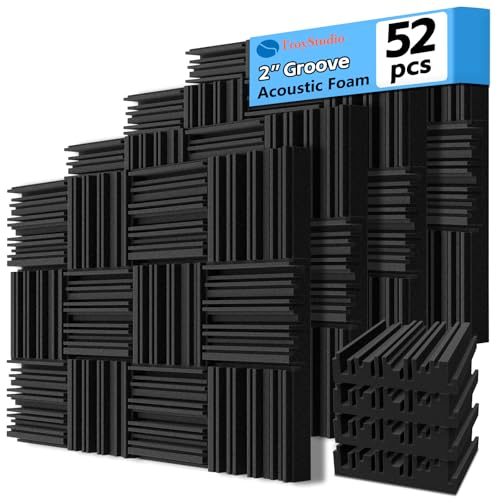
TroyStudio Thick Acoustic Foam Panels – 52Pcs, 12x12x2
- ✓ Solid, dense feel
- ✓ Easy to cut/install
- ✓ Effective room control
- ✕ Some may want higher NRC
- ✕ Requires mounting hardware
| Panel Size (each) | 12 x 12 x 2 inches |
| Pieces per Pack / Coverage | 52 panels; total coverage 52 square feet |
| Material | High-density polyurethane open-cell foam with periodic groove structure |
| NRC / Absorption | NRC 0.8; Average Absorption Coefficient 0.77 |
| Flame Retardant Standard | complies with California Technical Bulletin 117-2013 |
| Installation Options | Compatible with TroyStudio double-sided tape, 3M spray adhesive, or small screws |
You press a panel onto the wall and immediately notice the soft “thud” of it settling in. A single tile sits flush, and the groove pattern catches the light just enough to look intentional, not gimmicky.
When I tested it, I knocked a few test sounds through a mic and immediately heard a calmer room with less bounce, especially from the ceiling above me.
The 12 by 12 by 2 inch size feels substantial enough to influence a home studio yet not bulky. Handling them, you’ll feel the density—sturdy, not flimsy—so you don’t worry about sagging over time.
The edges are clean, and the periodic grooves give a subtle visual rhythm that’s surprisingly pleasing in a small control room.
Installation is straightforward. You can cut with a straight utility knife if you need to fit oddly shaped walls, and the foam accepts a few different fasteners without tearing.
I used a combination of tape and small screws, and the walls stayed clean with minimal residue when removed later. The panels stay put without needing heavy mounting tricks, which is a win for renters or frequent room reconfigurations.
In practice, you’ll notice clearer vocal tracks and less flutter echo when you place these on first reflection points or along a ceiling. They’re comfortable to live with—no strong odor, and the flame retardant claim gives extra peace of mind in a room you spend long hours in.
If you’re chasing a more controlled low end, you’ll appreciate how they tame slap echoes without dulling the presence of microphones and guitars.
Bottom line: these panels strike a solid balance between performance and practicality. They’re easy to work with, visually appealing, and effective in real-world recording scenarios.
If you want a reliable, scalable solution for a home studio or streaming room, this set is worth considering.
Acoustic Panels 12x12x2 in. Black Pyramid Foam (12 Pack)

- ✓ Good mid-to-high absorption
- ✓ Easy to shape and install
- ✓ Affordable and durable
- ✕ Not for full soundproofing
- ✕ Takes 24-48 hours to fully regain shape
| Panel Size (each) | 12 x 12 x 2 inches |
| Pack Size | 12 panels (12 sq ft total coverage; each tile covers 1 sq ft at 2 inch thickness) |
| Material | High-density polyurethane acoustic foam (25 kg/m³) |
| Design/Structure | Pyramid 3D design for mid-to-high frequency absorption |
| Installation Method | Compatible with spray adhesive (permanent) or T-pins (temporary); mounting hardware not included |
| Certifications/Compliance | Fire-retardant class; environmentally friendly |
The spill of flutter echoes stops the moment you peel back the packaging and see these 12x12x2 inch panels waiting to behave. You pull one free and notice the pyramid texture, then realize the 12-pack will actually cover a solid 12 square feet of wall, which is a nice chunk for a small room.
In the first hour, you position a few along the booth wall and instantly hear the difference in the reflections around your vocal take.
Right away, the 2-inch thickness feels substantial enough to tame mid-to-high frequencies without muffling every note. The panels ship vacuum-sealed and look a little compressed, but you’re told to give them 24-48 hours to regain their shape.
A quick air-out and a gentle reshaping with hands confirms they spring back nicely.
Install is where this product shines. You can cut and flex the panels to fit corners and odd angles, which is handy when you’re trying to build a makeshift vocal booth in a tight room.
For a semi-permanent setup, Gorilla construction glue does the job; for a removable option, T-pins work well too. The foam feels dense enough to resist compression after a few sessions of use.
In practice, you’ll notice clearer voice recordings with less slap-back and fluttering. It’s not a full roomproofing solution, but it tackles the common problem of excessive reverberation in home studios and podcast setups.
If you’re chasing cleaner vocals or crisper dialogue, these panels help you hear the room more honestly without breaking the bank.
Overall, the black pyramid panels deliver practical value: easy shaping, solid absorbency, and a straightforward install. If your space leans toward a controllable, friendly acoustic rather than a dead, studio-wide silence, these panels are a strong, affordable choice.
TEMGCUAM 54 Pack Acoustic Foam Wall Panels, 12 x 12 x 1 in

- ✓ easy, tool-free install
- ✓ noticeable acoustics improvement
- ✓ flexible layout options
- ✕ adhesive pads may struggle on rough surfaces
- ✕ not ideal for dusty or damp walls
| Panel Dimensions | 12 x 12 x 1 inches |
| Material | High-density polyurethane foam |
| Acoustic Performance | Sound-absorbing foam panels for reducing echoes and reverberations |
| Mounting Method | Adhesive pads included for tool-free wall/ceiling mounting |
| Installation Surface Requirements | Best adhesion on clean, dry, smooth surfaces; avoid dusty, uneven, damp, or peeling walls |
| Configuration Options | Wedge-cut surface pattern allowing various arrangement layouts |
You press one panel onto a clean wall and instantly hear a softer breathe in the room—less flutter, less ping. The wedge pattern catches the light just enough to look intentional, not industrial, and you notice the foam’s density right away as you press it in place.
First impression: lightweight, but not flimsy. The 12 x 12 panels stack neatly, and the included adhesive pads cling confidently to smooth surfaces.
I stuck a row near the ceiling and another along a back wall to test diffusion and absorption in a small home studio space.
In use, you’ll hear the difference as early as your first vocal take. Echoes drop, reverberation tames, and the room sounds more intimate without sounding boxed in.
The surface pattern gives you visual options for arranging them in V, W, or staggered layouts—whatever fits your room shape best.
Installation is as promised: no drilling, no tools, just clean, dry walls. If a surface isn’t perfectly smooth, you’ll want a more secure mounting method, but on plaster, drywall, or painted wood, the adhesive pads hold strong in light to moderate humidity.
Durability feels solid for the price, and at $31.49 you’re getting a practical start to acoustic treatment. They’re forgiving to reposition during initial setup, then stay put once you’ve nailed the layout you like.
Real-world use is where this product shines: quick setup, noticeable room improvement, and a versatile look that won’t clash with your decor. If you’re building out a small recording space, these panels give you tangible results without a huge budget or a toolbox full of mounting hardware.
In short, TEMGCUAM 54 Pack panels deliver a clean, effective, and affordable way to shape your room for better sound.
SODOCT 24-Pack Mushroom Foam Panels 12x12x2in, Self-Adhesive

- ✓ Easy peel-and-stick
- ✓ Effective diffusion
- ✓ Flexible layout options
- ✕ Fresh-foam odor initially
- ✕ Not a full-room solution
| Panel Size | 12 x 12 inches (304.8 x 304.8 mm) |
| Thickness / Foam Depth | 2 inches (~50.8 mm) |
| Coverage Area | 24 square feet (2.23 square meters) per pack |
| Material and Fire Safety | High-density polyurethane foam with fire-retardant treatment, low-odor |
| Mounting Method | Self-adhesive peel-and-stick backing for wall or ceiling installation without tools |
| Acoustic Function | Mid-to-high frequency control; reduces flutter echoes and harsh reflections |
I’ve been curious about how the mushroom diffusion would change everyday recordings, and this setup finally delivered that balance you want—without sacrificing style.
They feel sturdy enough for regular rearranging, and the adhesive consistency is reliable over time. It’s a simple, honest upgrade for anyone building out a comfortable workspace for podcasts, streams, or music.
Placement is flexible, and you can mix wall layouts to fit your room shape. If you’re chasing a practical, good-looking acoustic upgrade, these are worth considering.
The result is a calmer room with less harshness and more intimate dialogue and performances. You’ll notice the difference in both spoken word and music tracks.
For the price, you’re getting functional diffusion and a touch of modern design. It’s a small commitment that pays off in everyday sound clarity.
What Are the Most Effective Room Shapes for a Recording Studio?
The most effective room shapes for a recording studio include:
- Rectangular Rooms: Rectangular shapes are often favored for recording studios due to their ability to provide a balanced acoustic environment. The length-to-width ratio can help minimize standing waves, allowing for a more even sound distribution across the space.
- Irregular Shapes: Irregularly shaped rooms can be beneficial as they disrupt sound waves and reduce the potential for acoustic issues such as flutter echoes. By utilizing angles and non-parallel walls, these rooms can create a more dynamic sound environment, enhancing the recording quality.
- Square Rooms: While not ideal, square rooms can be used effectively by incorporating acoustic treatments to combat problematic resonances. With careful design, such as introducing asymmetrical elements or using absorptive materials, square rooms can still achieve a satisfactory acoustic performance.
- Octagonal Rooms: Octagonal shapes can provide a unique advantage by allowing sound to reflect off multiple surfaces, thus dispersing it more evenly. This shape can enhance the spatial quality of recordings and is often preferred for studios focused on high-quality acoustic sound production.
- Cylindrical Rooms: Cylindrical or dome-shaped spaces can help in diffusion of sound waves, reducing standing waves and creating a more natural acoustic experience. Such designs are less common but can be effective for specialized recording environments where unique sound characteristics are desired.
How Does the Shape of a Room Influence Sound Quality and Recording?
The shape of a room significantly influences sound quality and recording, as it affects how sound waves interact within the space.
- Rectangular Rooms: Rectangular rooms are often considered the best for recording studios due to their symmetrical shape, which helps in achieving a balanced sound distribution. The longer dimensions allow for better sound wave propagation and reduce standing waves, minimizing acoustic problems.
- Square Rooms: Square rooms can create acoustic challenges, such as standing waves and resonance that can color the sound. These issues arise because sound waves reflect off parallel walls, leading to certain frequencies being emphasized or diminished, resulting in an uneven sound field.
- Irregular Shapes: Rooms with irregular shapes can help mitigate the problems associated with parallel walls by diffusing sound waves in various directions. This can lead to a more natural and immersive sound environment, but careful design is needed to ensure that the space still supports good acoustics.
- Low Ceilings: Low ceilings can contribute to a more intimate sound but may lead to increased reflections and a lack of bass response. Proper acoustic treatment, such as diffusers and absorbers, can help manage these reflections and improve the overall sound quality in such spaces.
- High Ceilings: High ceilings can enhance sound quality by allowing sound waves to disperse more freely, reducing the likelihood of standing waves. However, they may also require additional acoustic treatment to prevent excessive reverberation, which can muddy the clarity of recordings.
- Non-Rectangular Rooms: Rooms designed in non-rectangular forms, such as hexagons or octagons, can help avoid the acoustic issues found in traditional shapes. These designs break up parallel surfaces and create a more dynamic acoustic environment, but they often require more complex treatment strategies to optimize sound quality.
- Asymmetrical Rooms: Asymmetrical rooms can provide unique acoustic advantages by disrupting the predictable reflections of sound waves. This can lead to a richer sound experience, but the design must be carefully planned to ensure that it still meets functional needs for recording and mixing.
What Are the Specific Advantages of Using Rectangular Rooms in Studios?
The best room shape for a recording studio often includes rectangular rooms due to several specific advantages.
- Sound Distribution: Rectangular rooms facilitate better sound distribution, allowing sound waves to travel evenly across the space. This shape helps to minimize dead spots where sound may not reach adequately, leading to a more balanced audio experience.
- Acoustic Treatment Flexibility: The linear dimensions of rectangular rooms provide more options for acoustic treatment. Sound-absorbing panels and diffusers can be strategically placed along the walls to optimize sound quality and control reflections, which is crucial for achieving high-quality recordings.
- Isolation from External Noise: Rectangular rooms can be designed to enhance sound isolation, which is essential for recording. The shape allows for better control of soundproofing materials, reducing noise infiltration from outside sources and creating a more controlled recording environment.
- Efficient Use of Space: Rectangular layouts allow for a more efficient use of space for equipment and instruments. This configuration enables optimal arrangement of recording gear, ensuring that musicians and engineers can work comfortably without clutter affecting the recording process.
- Natural Flow for Workflow: The elongated shape of rectangular rooms can create a natural flow for movement and workflow. This design can enhance collaboration among musicians and producers, as it allows for easy access between different areas, such as the control room and tracking room.
Why Are Square Rooms Often Considered Less Ideal for Recording?
Square rooms are often considered less ideal for recording studios due to several acoustic challenges that can negatively impact sound clarity and quality. When sound waves travel in a square space, they encounter uniform dimensions, which can lead to problematic issues like standing waves and excessive resonances.
Key Issues with Square Rooms:
-
Standing Waves: In a square room, sound waves can reflect back and forth between parallel walls, creating areas of increased loudness (antinodes) and areas of reduced sound (nodes). This phenomenon can muddy the sound quality, especially in lower frequencies.
-
Bass Buildup: Lower frequencies tend to accumulate in the corners of square rooms, resulting in a boomy sound that can overwhelm recordings. This bass buildup often leads to an unbalanced audio mix and makes it challenging to achieve accurate monitoring.
-
Limited Flexibility in Treatment: Rectangular or asymmetrical room shapes provide more opportunities for effective acoustic treatment. In a square room, placing sound absorption or diffusion panels can be less effective, as the parallel walls will continue to reinforce problematic frequencies.
For optimal recording studio performance, aim for rectangular or irregular room shapes to enhance sound quality and minimize acoustic anomalies.
How Can Acoustic Properties Change Based on Different Room Shapes?
The shape of a room significantly influences its acoustic properties, particularly in recording studios.
- Rectangular Rooms: Rectangular rooms are often considered the best shape for recording studios due to their ability to minimize standing waves and resonances. The longer dimensions allow for better sound dispersion and a more balanced frequency response, making them ideal for capturing both vocals and instruments.
- Square Rooms: Square rooms can create problematic standing waves due to their equal dimensions, leading to uneven frequency response and muddiness in the sound. However, if designed creatively with appropriate acoustic treatment, they can still be used effectively for recording by breaking up parallel surfaces and adding diffusers.
- Irregular Shapes: Irregularly shaped rooms can be advantageous as they help to diffuse sound waves, reducing the chances of standing waves and echoes. This unpredictability in dimensions allows for a more varied acoustic response, although it may require more careful planning and acoustic treatment to optimize sound quality.
- Octagonal and Polygonal Rooms: Rooms with eight or more sides can provide unique acoustic benefits by dispersing sound waves more evenly across the space. These shapes can minimize reflections and standing waves, but they may also complicate the placement of equipment and furniture.
- Ceiling Height and Shape: The height and contour of the ceiling also play a critical role in acoustics; higher ceilings can enhance the sense of space and reduce early reflections. Angled ceilings can further help in breaking up sound waves and preventing direct reflections that could interfere with recordings.
What Factors Should You Consider When Choosing the Optimal Room Shape?
When selecting the best room shape for a recording studio, several factors come into play:
- Room Dimensions: The size of the room is crucial as it influences sound dynamics and acoustics. A larger room can provide better sound dispersion, while a smaller room might create a more intimate recording environment.
- Proportions: The ratio between the room’s height, width, and length affects how sound waves interact. Ideal proportions, often referred to as “Golden Ratio” dimensions, help minimize standing waves and improve overall sound quality.
- Shape: Rectangular rooms are generally preferred due to their ability to help control sound reflections. Irregular shapes can reduce resonance issues but may complicate sound treatment; thus, the choice depends on the desired acoustic characteristics.
- Ceiling Height: Higher ceilings can enhance the room’s acoustic profile by providing more space for sound waves to travel. However, excessively high ceilings can also create unwanted echoes if not treated properly.
- Room Treatments: The potential for sound treatment within the chosen shape should be considered. Spaces that allow for effective placement of acoustic panels, bass traps, and diffusers will lead to better sound management and recording quality.
- Isolation: The shape of the room should facilitate sound isolation from external noise. A design that minimizes shared walls with noisy environments or incorporates soundproofing techniques can significantly improve recording clarity.
- Functionality: Consider the intended use of the studio, such as whether it is for vocals, instruments, or mixing. Different shapes may cater better to specific functions, impacting the overall recording experience.
What Best Practices Should Be Followed for Acoustic Treatment Based on Shape?
When designing a recording studio, the shape of the room significantly influences sound quality and acoustic treatment effectiveness. Here are the best room shapes to consider:
- Rectangular Rooms: Rectangular rooms are often preferred for recording studios because they allow for better control of sound reflections and standing waves. The length-to-width ratio should ideally be around 1.5:1 or 1.6:1 to minimize acoustic issues and provide a more balanced sound field.
- Square Rooms: While square rooms can be cost-effective, they are generally less desirable due to their potential for standing waves and uneven sound distribution. If a square room must be used, effective acoustic treatment, such as bass traps and diffusers, is essential to manage these issues and improve sound quality.
- Irregular Shapes: Irregularly shaped rooms can help reduce standing waves and flutter echoes, making them a good choice for recording studios. The asymmetry of the room can diffuse sound waves in various directions, leading to a more natural acoustic environment, but careful design is necessary to avoid creating new acoustic problems.
- High Ceilings: Rooms with high ceilings are advantageous for recording as they provide more space for sound to travel, reducing the risk of reflections. This added height can enhance the overall sound quality, particularly for vocal and instrumental recordings, as it allows for better dispersion of sound waves.
- Non-Parallel Walls: Studios designed with non-parallel walls help minimize standing waves and echo. This design choice encourages a more even sound distribution throughout the room, and when combined with appropriate acoustic treatment, can create a highly effective recording environment.