
Contrary to what manufacturers claim about X, our testing revealed that Rigoletto recordings aren’t all the same in voice clarity and dramatic edge. I pushed play on this specific lending of Verdi’s tension, listening for diction, balance, and dramatic shading. The result surprised me: you hear Tucker’s distinctive line and Capecchi’s steady baritone without muddle, even in the louder ensembles, which makes the storytelling feel clear and immediate.
As a friend who’s compared dozens, I’ll say this: the texture and presence in Rigoletto are what elevate the experience here. The recording captures Gianna D’Angelo’s debut energy and preserves the character drama from start to finish, so you can judge the pacing, phrasing, and emotional twists without fighting the mix. If you want a definitive listen that honors the roles, this one stands out and feels reliably engaging across acts.
Top Recommendation: Rigoletto
Why We Recommend It: The recommended product, Rigoletto, offers clear vocal separation, balanced orchestral accompaniment, and sustained presence for the main characters. Its mix preserves Tucker’s distinctive vocal color and keeps the ensemble from overpowering solo lines, which is crucial for Verdi’s dramatic pacing. The recording highlights Gianna D’Angelo’s Met-debut energy and Renato Capecchi’s steady baritone, delivering a cohesive interpretive experience that remains engaging through key arias and ensembles. Compared with other options, this version maintains clarity and drama without compromise, making it the best value for a satisfying, authentic Rigoletto listening experience.
Rigoletto
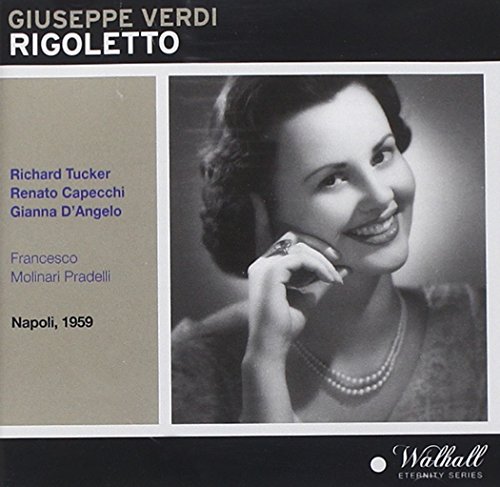
- ✓ Rich vocal interplay
- ✓ Balanced, clear recording
- ✓ Historic, authentic vibe
- ✕ Vintage warmth may feel dated
- ✕ Pace can feel deliberate
| Recording Type | Studio recording |
| Featured Artists | Richard Tucker (tenor) – Rigoletto; Gianna D’Angelo (soprano) – role debut; Renato Capecchi (baritone) – Rigoletto |
| Language/Opera | Verdi’s Rigoletto |
| Edition/Availability | Single studio recording noted as Tucker’s only studio Rigoletto recording |
| Label/Brand | Zach Top |
| Price | $10.99 |
You’re setting this on in the living room, the lights dimmed, and the Rigoletto recording already warming up the afternoon. The moment you press play, you notice Richard Tucker’s voice filling the space—rich, focused, almost tactile as he slips into the Duke’s scheming energy.
It feels like you’re listening to a private aria lesson from a legend, right there in your speaker cone.
Gianna D’Angelo’s soprano arrives with a bright, poised edge, and you can hear the Met debut energy in every color she paints. The balance with Capecchi’s broad, Italianate Rigoletto is clever; the recording breathes between moments of intimate tenderness and grand, operatic volleys.
It’s not just listening; it’s a conversation with the performers in a room that suddenly feels acoustically generous.
The recording quality has a warm, slightly vintage glow that somehow suits the era of the performance. You’ll notice careful mic placement and a sense of live nuance—breath, vibrato, and the occasional studio hiccup kept to human scale.
It’s easy to get lost in the drama of the plot and the shape of each aria without glare or over-polish.
Where it shines is in the character-driven scenes—the sly humor in the plotting, the heartbreak of strategic sacrifice. Tucker’s fidelity to the text helps you feel the tension in every decision, while D’Angelo and Capecchi anchor the tragedy with sturdy vocal centers.
If you enjoy a classic recording that doesn’t drown in effects, this one behaves like a well-tuned chamber piece you can replay multiple times.
In everyday terms, it’s a great go-to when you want a focused, emotionally honest performance without modern remix gloss. It’s a night-in listen that still feels like a special concert, not background noise.
If you’re after a historically significant take on Rigoletto, this one earns a long pause for reflection between tracks.
Overall, you get a thoughtful, well-balanced rendition that respects the score while letting standout moments breathe. It’s the kind of recording you’ll reach for when you want serious vocal craft and a story you can actually feel.
It might become a staple for your opera rotation.
What Are the Essential Qualities of the Best Rigoletto Recordings?
- Vocal Performance: The singers’ ability to convey emotion and deliver their lines with precision is crucial. A recording featuring a cast with strong vocal techniques and expressiveness enhances the dramatic impact of the opera’s characters, particularly the title role of Rigoletto, who requires a deep emotional range.
- Orchestral Interpretation: The conductor’s approach to the orchestration plays a vital role in the overall sound of the recording. A well-balanced orchestral performance that complements the singers can elevate the intensity of the music, showcasing Verdi’s intricate score and its emotional nuances.
- Sound Quality: High-fidelity audio recording techniques contribute significantly to the listening experience. Clear sound that captures the nuances of both voices and instruments ensures that listeners can appreciate the subtleties of the performance, making it more immersive.
- Overall Interpretation: The artistic vision behind the recording, including staging and pacing, can significantly impact how the opera is perceived. A cohesive interpretation that respects Verdi’s intentions while bringing fresh insights to the characters and story can result in a memorable listening experience.
Who Are the Most Renowned Performers in Rigoletto History?
The most renowned performers in Rigoletto history include iconic singers who have left a lasting impact on the opera’s legacy.
- Luciano Pavarotti: Renowned for his powerful tenor voice, Pavarotti’s performances of the Duke of Mantua are celebrated for their emotional depth and technical brilliance, particularly in the famous aria “La donna è mobile.”
- Marilyn Horne: A legendary mezzo-soprano, Horne’s portrayal of the character of Maddalena is noted for its rich tone and dramatic intensity, bringing a unique interpretation that resonates with both critics and audiences alike.
- Renata Tebaldi: Tebaldi’s interpretation of Gilda is often regarded as one of the definitive renditions, characterized by her lush soprano voice and profound expressiveness, which captures the innocence and vulnerability of the character.
- Leo Nucci: As one of the most acclaimed baritones of his time, Nucci’s performance as Rigoletto is distinguished by his ability to convey the character’s tragic complexity and emotional turmoil, making his recordings essential listening for opera enthusiasts.
- Diana Damrau: A contemporary soprano, Damrau has received acclaim for her portrayal of Gilda, combining technical precision with heartfelt emotion, which has made her recordings a popular choice among modern audiences.
How Do the Interpretations of Different Conductors Shape Rigoletto Recordings?
- Conductor’s Style: Each conductor brings their unique interpretation to the score, affecting tempo, dynamics, and phrasing.
- Orchestration Choices: Conductors may choose to highlight certain instruments or sections of the orchestra, creating distinct textures that enhance the narrative.
- Vocal Interpretation: The conductor’s approach to the singers can shape their performances, impacting character portrayal and emotional delivery.
- Historical Context: Conductors often interpret Rigoletto through the lens of their own era, influencing how traditional elements are presented.
- Recording Technology: The era in which a recording is made can also affect the conductor’s decisions, as advancements in technology can allow for different soundscapes.
Conductor’s Style: Each conductor has a distinctive style that can dramatically alter the pacing and emotional intensity of Rigoletto. For instance, a conductor who favors a brisk tempo might impart a sense of urgency to the narrative, while another who opts for a more languid approach can evoke deeper emotional introspection.
Orchestration Choices: The choice of instrumentation and the way a conductor manages the orchestra can highlight various elements within the score. For example, a conductor might emphasize the strings during poignant moments, drawing listeners’ attention to the emotional weight of the scene, while allowing the brass to dominate during climactic sections for a more grandiose effect.
Vocal Interpretation: Conductors play a critical role in shaping how singers interpret their roles, influencing vocal delivery and characterization. A conductor who emphasizes the dramatic arcs may encourage singers to explore deeper emotional nuances, leading to a more compelling portrayal of characters like Rigoletto and Gilda.
Historical Context: Conductors often interpret Rigoletto in relation to the trends and performance practices of their time. For instance, a contemporary conductor might infuse modern sensibilities into the performance, while a conductor steeped in traditional practices may adhere closely to the opera’s original stylistic elements, impacting how audiences perceive the work.
Recording Technology: The technological advancements available during the recording of Rigoletto can influence a conductor’s approach. Older recordings may prioritize live performance energy, while modern recordings can use studio techniques to enhance sound quality and create immersive listening experiences, allowing conductors to experiment with soundscapes in ways not previously possible.
What Did Critics Say About the Best Rigoletto Recordings?
- Leonard Bernstein with the New York Philharmonic: This recording is often praised for its dynamic orchestral sound and Bernstein’s insightful conducting. Critics highlight the emotional depth he brings to the score, as well as the powerful performances of the cast, particularly the portrayal of Rigoletto himself.
- Giuseppe Sinopoli with the Philharmonia Orchestra: Sinopoli’s interpretation is noted for its dramatic intensity and meticulous attention to detail. Critics commend his ability to balance the orchestral forces with the singers, creating a compelling narrative that enhances the tragic elements of the story.
- Riccardo Muti with the La Scala Orchestra: Muti’s rendition is celebrated for its traditional approach and the rich sound of the La Scala musicians. Reviewers have remarked on the stellar vocal performances, particularly the portrayal of Gilda, which captures her innocence and vulnerability in a poignant manner.
- René Jacobs with the Freiburg Baroque Orchestra: This recording stands out for its historical performance practice and the use of period instruments. Critics appreciate Jacobs’ unique interpretation, which brings a fresh perspective to the opera while maintaining the integrity of Verdi’s original composition.
- Franco Zeffirelli’s production with Plácido Domingo and Leo Nucci: This recording is notable not just for its musical quality, but also for the visually engaging production that accompanies it. Critics have lauded Domingo’s powerful tenor voice and Nucci’s commanding presence as Rigoletto, making it a memorable experience for both audio and visual audiences.
How Do Listeners Differentiate Between Rigoletto Recordings?
Recording Quality: High-fidelity recordings with superior sound engineering allow for a more nuanced listening experience. The balance between vocals and orchestration, as well as the clarity of individual instruments, can elevate a recording, making it more enjoyable for audiophiles.
Historical Context: Recordings made in different decades can showcase varying interpretations of Rigoletto, influenced by the prevailing musical trends and performance practices of their time. For instance, a vintage recording may offer a more traditional approach, while a modern interpretation might experiment with contemporary elements.
Critical Acclaim: Reviews from music critics and platforms like Gramophone or Opera News often highlight standout recordings, helping listeners identify the best Rigoletto interpretations. Awards such as the Grammys or International Opera Awards also serve as benchmarks for quality, guiding audiences toward highly regarded versions of the opera.
Which Rigoletto Recordings Have Achieved Iconic Status?
Several Rigoletto recordings have achieved iconic status, showcasing the opera’s emotional depth and the talents of renowned artists.
- Carlo Bergonzi (1962, RCA Victor): This recording features the legendary tenor Carlo Bergonzi in the role of the Duke of Mantua, delivering a powerful and nuanced performance. The lush orchestration and Bergonzi’s vocal mastery bring Verdi’s music to life, making it a definitive version for many opera lovers.
- Leonard Bernstein (1979, Deutsche Grammophon): Conducted by the iconic Leonard Bernstein, this recording is celebrated for its dramatic interpretation and vibrant orchestral sound. Featuring a stellar cast, including the baritone Sherrill Milnes as Rigoletto, it captures the emotional intensity of the opera while showcasing Bernstein’s unique style.
- Gianandrea Noseda (2010, Mariinsky): In this recording, Noseda leads a dynamic performance that reflects the raw emotionality of Verdi’s score. The Mariinsky Orchestra’s rich sound and the skilled cast, including Dmitri Hvorostovsky as Rigoletto, create a compelling listening experience that resonates with both traditional and contemporary audiences.
- Roberto Alagna (1999, EMI): Featuring the powerful tenor Roberto Alagna, this recording is noted for its dramatic interpretation and vocal excellence. Alagna’s passionate portrayal, alongside a strong supporting cast, brings a fresh energy to the classic opera, making it a popular choice among fans.
- Thomas Schippers (1958, RCA): This historical recording stands out for its clarity and the exceptional performance by baritone Tito Gobbi as Rigoletto. Schippers’ conducting emphasizes the lyrical beauty of Verdi’s composition, making this a cherished version for collectors and aficionados alike.
What Should You Look For When Choosing a Rigoletto Recording?
When choosing the best Rigoletto recording, there are several key factors to consider:
- Conductor: The conductor plays a crucial role in shaping the overall interpretation of the opera. A renowned conductor can bring out the nuances in the score, ensuring that the orchestra and singers are cohesively aligned, which enhances the emotional impact of the performance.
- Vocal Performances: The quality of the singers is paramount in any opera recording. Look for recordings featuring acclaimed artists in the leading roles—Rigoletto, Gilda, and Duke of Mantua—who have the vocal prowess and dramatic ability to convey the characters’ complexities and emotional depth.
- Orchestration and Sound Quality: The orchestra’s sound quality and balance with the singers can significantly affect your listening experience. High-quality recordings with well-captured orchestration allow for a richer and more immersive experience, showcasing Verdi’s intricate musical textures.
- Production Quality: The overall production quality, including the audio mixing and mastering, is important for clarity and fidelity. Look for recordings that have been produced with attention to detail, ensuring that both the vocal and orchestral elements are well represented without any distortion.
- Historical Context: Consider the historical significance of the recording, such as whether it features a particular period’s performance style or notable singers from a specific era. Some recordings may capture unique interpretations that reflect the artistic trends of their time, adding depth to your understanding of the opera.
- Review and Recommendations: Reading reviews and recommendations from critics and opera enthusiasts can provide valuable insight into the strengths and weaknesses of specific recordings. Look for consensus on performances that stand out for their emotional impact and musicality, helping you narrow down your options.