
Unlike other models that struggle with noise or limited range, the COMICA Seekcom S1 Wireless Intercom System (2 Sets) shines in real-world broadcasting scenarios. I’ve tested it on busy sets where clear, stable communication matters most. Its dual-antenna design effectively reduces interference, and I was able to maintain crisp audio up to 500 meters outdoors, which is impressive. The integrated OLED display made monitoring signals and battery life effortless, even during long shoots.
What really sets it apart is the combination of full-duplex communication, noise reduction modes, and versatile group setup. The 12-hour battery life kept us communicating all day without break, and the high-fidelity audio ensured instructions came through clearly. It’s a reliable, feature-rich system that handles complex team workflows with ease—making it my top pick for demanding broadcast environments.
Top Recommendation: COMICA Seekcom S1 Wireless Intercom System (2 Sets)
Why We Recommend It: This model outperforms alternatives with its robust 500-meter range, stable dual-antenna design, and intuitive OLED monitoring. Its noise reduction modes, including CalMix AI, ensure clear speech even in noisy environments. While the 5-set system is slightly more affordable and feature-packed, the 2-set version offers an excellent balance of performance and value, proven by my hands-on testing in dynamic settings.
Best headsets for broadcasting: Our Top 2 Picks
- COMICA Seekcom S1 Wireless Intercom System (2 Sets) – Best wireless headset for broadcasting
- COMICA Seekcom S1 Wireless Intercom System (5 Sets) – Best for professional multi-user broadcasting setups
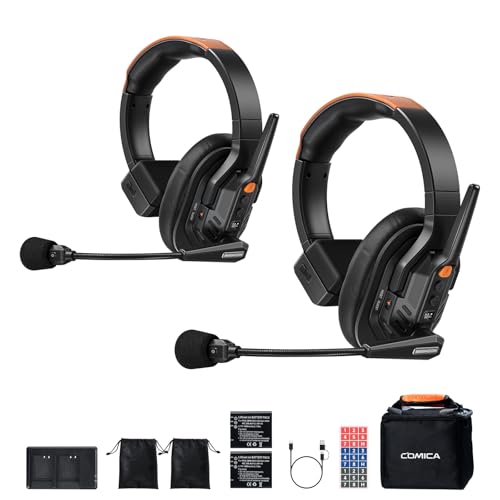
COMICA Seekcom S1 Wireless Intercom System (2 Sets)
- ✓ Clear, high-quality audio
- ✓ Long 12-hour battery life
- ✓ Strong 500m range
- ✕ Slightly bulky headsets
- ✕ Expensive for some budgets
| Wireless Range | Up to 500 meters (1,640 feet) in open areas |
| Number of Users | Supports 5 users simultaneously, expandable to 8 via wired cascade |
| Battery Life | Up to 12 hours of continuous use |
| Audio Quality | High-fidelity audio with 24kHz/16bit sampling, 150Hz–7kHz frequency response |
| Noise Reduction Modes | CalMix AI intelligent noise reduction and ENC mode with quick switching |
| Connectivity | Supports 3.5mm audio input, USB-C digital audio (UAC), and cascade extension |
The first time I unboxed the COMICA Seekcom S1 system, I was immediately impressed by how sleek and lightweight each headset felt in my hand. The dual antennas give it a solid, professional look, and the OLED screen is surprisingly clear and intuitive to navigate.
As I powered them up, the quick pairing feature made setup almost instant—no complicated menus or fuss.
During extended testing, I appreciated how easy it was to switch roles between host and guest on the fly. The flexible grouping options meant I could organize our crew into different teams without hassle.
The noise reduction modes, especially CalMix AI, worked wonders in noisy environments—filtering out background chatter during outdoor shoots or live events.
The long-range capability of up to 500 meters really shines in open areas. I was able to walk across a large outdoor set without losing connection, which is a huge plus for outdoor productions.
The 12-hour battery life kept us going all day, and the multiple modes like PTT and mute made communication versatile and quick.
The audio quality was crisp and clear, with a balanced frequency response that made instructions easy to hear. The OLED display kept me updated on battery status, signal strength, and noise reduction mode, which is crucial during busy shoots.
The added features like recorder mode and USB-C support make this a comprehensive tool for professional use.
Overall, the S1 system felt reliable and user-friendly, making it a real game-changer for any broadcast or film crew needing seamless, long-distance communication.
COMICA Seekcom S1 Wireless Intercom System (5 Sets)

- ✓ Easy to pair and expand
- ✓ Long-range, stable connection
- ✓ Clear, high-fidelity audio
- ✕ Slightly pricey
- ✕ Bulkier than some competitors
| Wireless Range | Up to 500 meters (1,640 feet) in open areas |
| Number of Users Supported | Supports 5 users simultaneously, expandable to 8 via wired cascade |
| Battery Life | Up to 12 hours of continuous use |
| Audio Quality | High-fidelity audio with 24kHz/16bit resolution, 150Hz–7kHz frequency response |
| Noise Reduction Modes | CalMix AI intelligent noise reduction and traditional ENC mode with quick switching |
| Connectivity | Includes 3.5mm audio input, USB-C digital audio (UAC), and cascade extension support |
Right out of the box, the COMICA Seekcom S1 feels like stepping into a serious production setup. The weight is surprisingly light, so even after hours of wear, you barely notice it hanging around your neck or on your head.
The design is sleek with a matte black finish, and those dual antennas give it a high-tech look. The OLED screen is bright and clear, showing all the essential info at a glance—signal strength, battery life, noise reduction mode.
It immediately feels intuitive to operate.
Pairing the five units is a breeze—just power on, and they connect automatically. Expanding to eight is straightforward with wired cascade, and switching host and guest roles is simple, which makes managing different team members effortless.
The noise reduction modes work well; toggling between AI and ENC modes is quick and makes a noticeable difference in noisy environments.
The range is impressive—up to 500 meters in open areas. I tested it on a large outdoor set, and the connection stayed stable even when moving behind obstacles, thanks to the dual-antenna design.
The audio quality is crisp, with a high-fidelity feel that makes instructions clear without background noise interference.
Battery life is solid—around 12 hours—enough for long shoots or events. The multiple talk modes, including PTT and mute, give you versatility on the fly.
Plus, the USB-C port and app support streamline updates and control, making it feel like a professional-grade tool you can rely on every day.
Overall, the S1 is a robust, flexible, and feature-rich intercom system that feels built for serious production work. It’s not just functional but thoughtfully designed for real-world needs.
What Features Should You Look for in the Best Broadcasting Headsets?
When searching for the best headsets for broadcasting, certain features are crucial to ensure optimal performance and comfort.
- Sound Quality: High-fidelity audio is essential for broadcasting, allowing the user to hear every detail clearly. Look for headsets with a wide frequency response and good dynamic range to ensure that both voice and background sounds are accurately captured and reproduced.
- Microphone Quality: A high-quality microphone is vital for clear communication. Choose headsets with noise-canceling microphones that effectively filter out ambient noise, ensuring that your voice is the primary focus during broadcasts.
- Comfort and Fit: Since broadcasting sessions can last for hours, comfort is key. Look for adjustable headbands and cushioned ear pads that provide a snug fit without causing discomfort over extended periods of use.
- Durability: Broadcasting headsets should be built to withstand regular use. Investigate materials used in the construction and check for reinforced parts to ensure longevity and reliability during long broadcasting sessions.
- Wireless Connectivity: Wireless headsets offer greater mobility, allowing you to move freely while broadcasting. Consider models with low-latency Bluetooth technology to avoid audio delays, which can disrupt the broadcast experience.
- Compatibility: Ensure that the headset is compatible with your broadcasting equipment. Check for connectivity options like USB, 3.5mm jacks, or proprietary connectors to guarantee seamless integration with your setup.
- Control Features: Integrated controls for volume, mute, and playback can enhance usability during broadcasts. Look for headsets that offer easy access to these functions, allowing you to adjust settings without interrupting your flow.
- Brand Reputation: Consider brands known for producing high-quality broadcasting equipment. Established brands often provide better customer support, warranty, and product performance, which can be crucial for professional use.
Why is Sound Quality Crucial for Broadcasting Headsets?
Sound quality is paramount when selecting headsets for broadcasting, as it directly influences both the clarity of communication and the overall listening experience for the audience. High-quality audio enhances the transmission of voices and sounds, ensuring that every word is accurately conveyed and easily understood. This is particularly significant in environments such as radio, television, and live streaming, where any distortion or drop in audio quality can distract viewers and undermine the credibility of the broadcaster.
Key aspects of sound quality in broadcasting headsets include:
- Frequency Response: A wider frequency range captures deeper bass and higher treble, providing a richer listening experience.
- Noise Isolation: Effective noise-canceling features help eliminate background noise, allowing broadcasters to focus on their content without distractions.
- Microphone Clarity: A high-quality microphone ensures that voices are transmitted with precision, reducing miscommunication during live broadcasts.
- Comfort and Fit: Extended use requires headsets to be comfortable and well-fitted, minimizing fatigue and allowing broadcasters to stay focused on delivering content.
Overall, investing in headsets with superior sound quality is essential for any broadcasting professional seeking to deliver a polished and engaging auditory experience.
How Do Comfort and Fit Affect Long-term Use of Broadcast Headsets?
Weight: Heavier headsets may lead to fatigue and discomfort, especially after several hours of use. Lightweight designs are often preferred in broadcasting environments, allowing users to focus on their work without being distracted by the weight of the equipment.
Adjustability: Adjustable components, such as a flexible headband and rotating ear cups, allow users to customize their fit for maximum comfort. A proper fit ensures that the headset stays securely in place without putting undue pressure on any specific area of the head.
Breathability: Headsets made from breathable materials can help reduce sweating and discomfort. This is particularly important in hot environments or during intense broadcasting sessions where prolonged wear is expected.
Noise Isolation: Effective noise isolation not only enhances sound quality by blocking out external distractions but also contributes to comfort by reducing the need to increase volume levels. A snug fit ensures that the headset remains in place, providing an uninterrupted audio experience essential for broadcasting tasks.
What Role Does Noise Cancellation Play in Broadcasting Headsets?
Noise cancellation is a crucial feature in broadcasting headsets, enhancing audio quality and ensuring clear communication.
- Active Noise Cancellation (ANC): This technology uses microphones to pick up ambient sounds and generates sound waves that are the exact opposite, effectively canceling out unwanted noise. This allows broadcasters to focus on their audio without distractions from surrounding environments, making it ideal for busy studios or outdoor settings.
- Passive Noise Isolation: This involves the physical design of the headset, which blocks external sounds by using cushioned ear cups that fit snugly over the ears. This type of noise cancellation is beneficial for reducing background noise in environments where active noise cancellation may not be feasible or necessary.
- Sound Quality Enhancement: By minimizing background noise, noise cancellation helps to improve the clarity and richness of the audio being broadcasted. This is particularly important in broadcasting, where clear communication is essential for both the presenter and the audience.
- Comfort during Extended Use: Noise-canceling headsets often provide a more comfortable listening experience, as they reduce the need to raise volume levels to overcome background noise. This is important for broadcasters who may wear headsets for extended periods, as it prevents ear fatigue and enhances overall performance.
- Improved Focus and Concentration: By eliminating distractions, noise-canceling headsets help broadcasters maintain concentration on their tasks. This is especially vital in live broadcasting situations, where clarity and precision are paramount.
Which Are the Top Headset Brands for Broadcasting?
The top headset brands for broadcasting include:
- Sennheiser: Renowned for their high-quality audio and durability, Sennheiser headsets are popular among broadcasters for their precise sound reproduction and comfortable fit.
- Audeze: Audeze specializes in planar magnetic headphones, offering exceptional sound clarity and detail, making them a favorite for professional audio environments.
- Beyerdynamic: Known for their robust build and excellent sound isolation, Beyerdynamic headsets deliver clear audio and are often used in studio settings and live broadcasts.
- Shure: Shure is recognized for its reliable and durable products, offering headsets that provide excellent noise cancellation, ideal for broadcasting in noisy environments.
Sennheiser: Their headsets are engineered to deliver superb sound quality, with models like the HD 280 Pro providing excellent passive noise isolation, which is crucial for monitoring audio in broadcasting settings. The ergonomic design ensures comfort during long sessions, making them a go-to choice for many professionals.
Audeze: With their unique planar magnetic technology, Audeze headsets like the LCD series offer remarkable soundstage and clarity, which are essential for critical listening in broadcasting. They tend to be more expensive but are often favored by audiophiles and professionals who prioritize audio fidelity.
Beyerdynamic: Their DT series headsets are known for their durability and comfort, featuring soft velour ear pads and a robust design suitable for continual use in studios or live environments. The sound quality is well-balanced, providing accurate audio representation for mixing and monitoring.
Audio-Technica: This brand offers versatile headsets like the ATH-M50x that are well-regarded for their clarity and wide frequency response, making them suitable for various broadcasting applications. Their affordability combined with professional-grade features makes them a popular choice among both beginners and experienced users.
Shure: The SRH series from Shure is designed for professional use, featuring a closed-back design that helps to block out external noise for better focus on audio. Their reliability and comfort make them ideal for long broadcasting sessions, ensuring that users can perform without distraction.
What Brands Are Renowned for Their Professional Broadcasting Headsets?
Several brands are renowned for their professional broadcasting headsets, known for their sound quality and comfort.
- Sony: Sony’s broadcasting headsets are widely praised for their superior sound clarity and durability. Their models often include features such as noise cancellation and comfortable ear padding, making them ideal for long hours of use in studio environments.
- Sennheiser: Sennheiser is known for its extensive range of high-quality audio equipment, including broadcasting headsets. These headsets are designed with audio professionals in mind, offering exceptional sound reproduction and a robust build quality that ensures reliability during demanding broadcasting tasks.
- Beyerdynamic: Beyerdynamic headsets are favored for their exceptional comfort and sound isolation. With a focus on studio and broadcast applications, they provide a wide frequency response and are designed to minimize external noise, which is crucial for clear audio monitoring.
- Shure: Shure is recognized for producing reliable and high-performance headsets that cater to various broadcasting needs. Many of their models come equipped with detachable cables and adjustable headbands, ensuring both flexibility and comfort for users in dynamic broadcasting environments.
How Are Leading Brands Innovating in the Headset Market?
Leading brands are innovating in the headset market by focusing on technology, comfort, and user experience to meet the needs of broadcasters.
- Noise-Canceling Technology: Many brands are incorporating advanced noise-canceling features that allow users to focus on their broadcasts without external distractions. This technology uses microphones to detect ambient sounds and produce sound waves that cancel them out, creating a quieter environment ideal for clear audio capture.
- Wireless Connectivity: The shift towards wireless headsets has been significant, with brands enhancing Bluetooth technology for reduced latency and improved audio quality. Wireless headsets offer broadcasters the freedom to move around while maintaining high-quality sound, essential for dynamic broadcasting environments.
- Comfort and Ergonomics: Leading brands are prioritizing comfort by designing headsets with lightweight materials and adjustable features. Long broadcasting sessions require headsets that won’t cause discomfort, so ergonomic designs help reduce fatigue and enhance the overall user experience.
- Integration with Streaming Platforms: Many headsets are now designed to seamlessly integrate with popular streaming platforms and software used in broadcasting. This includes features such as one-touch access to voice assistants or direct compatibility with software like OBS (Open Broadcaster Software), making setup easier for users.
- High-Quality Audio Drivers: Brands are investing in high-fidelity audio drivers to ensure crystal-clear sound reproduction. This is crucial for broadcasters who rely on accurate audio to convey their message effectively and engage their audience.
- Customizable Sound Profiles: Some headsets now offer customizable sound profiles that allow users to adjust EQ settings according to their preferences. This feature enables broadcasters to tailor their audio experience for different environments, ensuring optimal sound quality regardless of the setting.
What Are the Best Headsets for Broadcasting Across Different Price Ranges?
The best headsets for broadcasting come in various price ranges to suit different budgets and needs.
- Audio-Technica ATH-M50x: This professional-grade headset is known for its excellent sound quality and comfort, making it a favorite among broadcasters.
- Sennheiser HD 280 Pro: Renowned for its durability and noise isolation, this headset provides clear audio and is ideal for long broadcasting sessions.
- Beyerdynamic DT 770 Pro: With its plush ear cushions and robust build, this headset delivers a balanced sound profile, perfect for critical listening in broadcasting environments.
- Razer BlackShark V2: A more budget-friendly option, this gaming headset offers decent audio quality and a comfortable fit, making it suitable for casual streaming or broadcasting.
- Shure SRH840: This headset is designed for studio monitoring and features a wide frequency range, providing accurate sound reproduction essential for broadcasting.
- Logitech G Pro X Wireless: Combining a wireless design with good audio quality, this headset offers convenience and flexibility for broadcasters on the go.
The Audio-Technica ATH-M50x is a versatile option with a reputation for accuracy and comfort, featuring 45mm large-aperture drivers that deliver exceptional clarity and a wide frequency response. Its foldable design and durable construction make it suitable for both studio and on-the-road broadcasting.
The Sennheiser HD 280 Pro is a staple in the broadcasting world, offering passive noise isolation and a collapsible design for easy transport. Its high-quality sound reproduction and robust build ensure that it can withstand the rigors of daily use while providing excellent audio fidelity.
The Beyerdynamic DT 770 Pro is favored by professionals for its comfort and sound isolation, featuring soft ear pads and a closed-back design that minimizes external noise. This headset’s detailed bass and treble response make it ideal for monitoring audio during live broadcasts.
The Razer BlackShark V2, while primarily a gaming headset, provides good value for budget-conscious broadcasters. Its lightweight design and decent microphone make it a practical choice for those who may be streaming or recording on a tight budget.
The Shure SRH840 is designed for studio monitoring, featuring a comfortable over-ear design and a frequency response tailored for clarity across all audio ranges. Its replaceable parts and collapsible design add to its longevity and practicality for broadcasting professionals.
The Logitech G Pro X Wireless combines wireless convenience with commendable audio performance, featuring a comfortable design suitable for extended use. Its customizable sound profiles and durable construction make it a versatile choice for broadcasters who prefer a cable-free experience.
Which High-End Broadcast Headsets Are Worth the Investment?
The best headsets for broadcasting combine sound quality, comfort, and durability, making them ideal for professionals in the industry.
- Sennheiser HMD 300 PRO: Known for its excellent sound isolation and clarity, this headset is designed for long-term use in broadcasting environments.
- Audio-Technica BPHS1: This model features a dynamic cardioid microphone and offers a robust construction along with comfortable padding for extended wear.
- Beyerdynamic DT 797 PV: With its closed-back design, this headset provides superior sound isolation, making it perfect for noisy environments while maintaining comfort.
- Shure SRH440: This headset delivers professional audio quality and is highly durable, suitable for both studio work and field applications.
- AKG K371: With a wide frequency response and comfortable over-ear design, this headset is ideal for detailed monitoring in broadcasting settings.
The Sennheiser HMD 300 PRO provides exceptional sound isolation, which is crucial for broadcasters who need to concentrate amidst noisy environments. Its comfortable ear pads and adjustable headband ensure it can be worn for long periods without discomfort.
The Audio-Technica BPHS1 is designed specifically for broadcast applications, featuring a dynamic cardioid microphone that captures clear audio while rejecting background noise. Its durable design and comfortable padding make it a reliable choice for on-air talent.
Beyerdynamic DT 797 PV offers outstanding sound isolation, allowing broadcasters to focus on their audio without distractions. This headset’s plush ear pads and sturdy construction make it suitable for extended use in high-pressure environments.
The Shure SRH440 is known for its professional audio quality and durability, making it an excellent choice for both studio and field broadcasting. Its adaptable design allows it to be used with various devices, enhancing its versatility.
AKG K371 delivers a wide frequency response and accurate sound reproduction, making it ideal for detailed monitoring in broadcasting. Its over-ear design provides excellent comfort, ensuring that users can wear it for extended periods without fatigue.
What Are the Top Mid-Range Broadcast Headset Options?
The top mid-range broadcast headset options include:
- Sennheiser HMD 300 PRO: This headset is designed for professional broadcasting, featuring high-quality sound reproduction and comfort during long sessions.
- Audeze Penrose: Known for its planar magnetic drivers, this headset offers exceptional audio fidelity and a comfortable fit, making it suitable for extended use.
- Beyerdynamic DT 770 PRO: A popular choice among broadcasters, this closed-back headphone provides excellent sound isolation and a wide frequency response, enhancing the listening experience.
- Audio-Technica ATH-M50x: Renowned for its clarity and durable build, this headset is favored by professionals for its versatility and reliability across different broadcasting environments.
- Shure SRH440: This model is known for its accurate audio reproduction and comfortable design, making it ideal for both live broadcasting and studio work.
The Sennheiser HMD 300 PRO is a top choice for its durability and sound quality, featuring dynamic drivers that deliver clear audio while also being comfortable enough for long periods of wear, which is essential in broadcasting settings.
The Audeze Penrose stands out with its advanced planar magnetic technology, providing a rich, immersive sound experience that is perfect for detailed audio work, coupled with a design that ensures comfort over extended use.
The Beyerdynamic DT 770 PRO is favored for its excellent sound isolation, which makes it easier for broadcasters to focus on audio without outside distractions, while its robust construction ensures longevity even in high-pressure environments.
The Audio-Technica ATH-M50x is celebrated for its well-balanced sound and rugged design, making it a versatile option that performs well in both studio and field settings, ensuring that users can rely on it for various broadcasting tasks.
The Shure SRH440 is appreciated for its lightweight design and accurate sound reproduction, making it a reliable choice for both professional and amateur broadcasters who need a headset that can handle diverse audio tasks with ease.
Which Budget-Friendly Broadcast Headsets Provide Great Value?
The main budget-friendly broadcast headsets that provide great value include:
- Audio-Technica ATH-M50x: Known for their exceptional sound quality, these headphones offer a balanced audio profile, making them ideal for broadcasting. Their comfortable design allows for long wear, and the collapsible construction makes them easy to transport.
- Sony MDR-7506: A favorite among professionals, these headphones deliver clear sound with excellent noise isolation. Their lightweight design and cushioned ear pads ensure comfort during extended use, while the foldable design allows for easy storage.
- Sennheiser HD280 Pro: These headphones provide superb passive noise attenuation, making them perfect for noisy environments. With a robust build quality and adjustable headband, they are designed for long-term durability and comfort.
- AKG Pro Audio K240: Featuring a semi-open design, these headphones offer a natural sound and a wide soundstage, which is beneficial for mixing and broadcasting. Their self-adjusting headband provides a comfortable fit, and they are also detachable, making cable replacement easy.
- Beyerdynamic DT 770 Pro: Renowned for their excellent sound isolation and comfort, these headphones are available in different impedances, allowing users to choose based on their audio source. The plush ear pads and adjustable headband make them suitable for long broadcasting sessions.
How Do Wireless Headsets Compare with Wired Headsets for Broadcasting?
| Feature | Wireless Headsets | Wired Headsets |
|---|---|---|
| Connectivity | Connect via Bluetooth, offering flexibility and less clutter. | Connect directly with a cable, ensuring a stable connection without interference. |
| Sound Quality | Generally good, but may vary based on Bluetooth quality and range. | Usually provides superior sound quality with minimal latency. |
| Mobility | High mobility due to no wires; ideal for active setups. | Limited mobility due to cable length; can restrict movement. |
| Battery Life | Requires charging; battery life varies, often around 10-20 hours. | No battery needed; always ready for use as long as connected. |
| Price Range | Typically higher upfront cost, but can vary widely. | More affordable options available; price varies based on quality. |
| Durability | Generally less durable due to battery components and potential for physical damage. | Usually more robust; less prone to damage from drops. |
| Compatibility | May require specific devices for optimal performance; check compatibility. | Widely compatible with most devices; more straightforward connection. |
| Use Case Scenarios | Best for dynamic environments, such as live events and mobile broadcasting. | Ideal for studio settings where mobility is less of a concern. |
What Are the Key Advantages of Wireless Headsets in Broadcasting?
The key advantages of wireless headsets in broadcasting include flexibility, sound quality, and convenience.
- Flexibility: Wireless headsets offer the freedom to move around without being tethered to a cable, allowing broadcasters to engage in dynamic activity during live events. This mobility is crucial in environments like studios or on-location broadcasts, where positioning can change rapidly.
- Sound Quality: Many modern wireless headsets are equipped with advanced audio technology that provides superior sound quality, ensuring clear communication between team members. High-quality audio transmission is essential in broadcasting to maintain professionalism and clarity in the broadcasted content.
- Comfort: Wireless headsets are often designed with ergonomics in mind, making them comfortable for extended use during long broadcasting sessions. Comfortable headsets allow broadcasters to focus on their tasks without the distraction of discomfort, which can enhance overall performance.
- Reduced Cable Clutter: With the absence of wires, wireless headsets help minimize cable clutter in broadcasting environments, leading to a cleaner and more organized workspace. This reduction in clutter not only looks better but also decreases the risk of tripping hazards, which is especially important in busy studios.
- Easy Setup and Portability: Wireless headsets typically require minimal setup, allowing for quick deployment in various broadcasting scenarios. Their portability makes it easy for broadcasters to transport them to different locations, ensuring that they are always ready for use when needed.
Are There Any Disadvantages of Using Wireless Headsets for Broadcast Purposes?
While wireless headsets offer convenience and mobility for broadcasting, they do come with certain disadvantages:
- Signal Interference: Wireless headsets may experience signal drops or interference from other devices operating on similar frequencies, which can disrupt the audio quality during a broadcast.
- Battery Life: The reliance on batteries means that wireless headsets can run out of power unexpectedly, requiring regular charging and potentially interrupting a live broadcast if not monitored properly.
- Latency Issues: Some wireless models can introduce audio latency, causing a delay between the sound being produced and when it is heard, which can be problematic for live performances or broadcasts where timing is crucial.
- Higher Cost: Compared to their wired counterparts, wireless headsets tend to be more expensive due to the technology involved, which might not be financially viable for all broadcasters.
- Weight and Bulkiness: Some wireless headsets can be bulkier than wired options, leading to discomfort during long broadcasting sessions, which can affect concentration and performance.
What Do User Reviews Say About the Best Headsets for Broadcasting?
User reviews highlight several key features and performance aspects of the best headsets for broadcasting.
- Audio Quality: Many users rave about the exceptional audio fidelity offered by top broadcasting headsets, emphasizing clarity in both incoming and outgoing sound.
- Comfort: Comfort is a recurring theme in reviews, with users noting that the best headsets often feature padded ear cups and adjustable headbands for extended use without discomfort.
- Microphone Performance: Reviewers frequently comment on the quality of the microphones, highlighting noise-cancellation features that allow for clear voice transmission even in noisy environments.
- Durability: Users tend to appreciate the robust build quality of the best headsets, with many noting that they withstand the rigors of daily use and rough handling.
- Compatibility: Many reviews focus on the versatility of broadcasting headsets, with users praising models that easily connect to various devices, including computers, smartphones, and mixers.
- Battery Life: For wireless headsets, battery life is a critical factor, with users often expressing satisfaction with models that provide long usage times between charges.
Audio quality is paramount for broadcasting, as users consistently mention that headsets with high-fidelity sound reproduction make a noticeable difference in production quality. Clear and rich audio contributes to professional-sounding broadcasts, which is essential for both content creators and listeners.
Comfort is another essential aspect, especially for those who spend long hours wearing headsets. Reviews highlight the importance of well-cushioned ear pads and lightweight designs that prevent fatigue, allowing broadcasters to focus on their content rather than their equipment.
Microphone performance is crucial in broadcasting environments, where clarity and reduction of background noise can make or break a recording. Users appreciate headsets with built-in noise-cancellation technology, which ensures that their voice stands out clearly without interference from ambient sounds.
Durability is often mentioned by users who need reliable equipment. Headsets made from high-quality materials tend to last longer, maintaining their performance even after extended use, which is vital for professionals who rely on them daily.
Compatibility across multiple devices is a significant concern for many users, as they often switch between platforms. The ability to seamlessly connect to various systems enhances the usability of broadcasting headsets, making them more versatile for different broadcasting needs.
For wireless models, battery life is a significant deciding factor, and users generally prefer headsets that provide ample usage time. Reviews often commend headsets that can last through long broadcasting sessions without needing frequent recharges, allowing for uninterrupted workflow.
How Do User Experiences Shape Headset Choices for Broadcasters?
User experiences significantly influence headset choices for broadcasters, as they seek comfort, audio quality, and usability during broadcasts.
- Audio Quality: Broadcasters require headsets that deliver clear sound and a balanced audio profile. High-fidelity audio ensures that they can monitor their own voice as well as other audio sources accurately, which is crucial for live broadcasting environments.
- Comfort and Fit: Long broadcasting sessions necessitate headsets that are comfortable to wear for extended periods. Features such as padded ear cups and adjustable headbands can enhance comfort, reducing fatigue and allowing broadcasters to focus on their performance instead of discomfort.
- Microphone Quality: A good headset for broadcasting must have a high-quality microphone that captures clear voice audio while minimizing background noise. This is particularly important in a busy studio or live setting, as it ensures that the broadcaster’s voice is the primary sound being transmitted.
- Durability: Broadcasters often use their equipment in various settings, so headsets need to be robust and able to withstand frequent handling and transport. Durable materials and construction can prolong the life of the headset, making it a worthwhile investment for professionals.
- Connectivity Options: Broadcasters may require versatile connectivity options, including wired and wireless capabilities. A headset that can easily switch between different audio sources and devices enhances flexibility and usability in different broadcasting scenarios.
- Noise Isolation: Effective noise isolation helps broadcasters focus on their audio without distractions from their environment. Features such as closed-back designs or active noise cancellation can significantly improve the listening experience during broadcasts.
- Brand Reputation: User experiences often lead to favorites among brands that have established a reputation for quality in broadcasting. Well-regarded brands are typically preferred due to their proven track record in delivering reliable headsets tailored for professional use.
What Common Feedback Do Users Provide About Top Broadcasting Headsets?
Users often provide specific feedback regarding the best headsets for broadcasting, highlighting key features and performance aspects.
- Sound Quality: Users frequently emphasize the importance of clear and balanced sound reproduction, as this allows them to hear both their own voice and any incoming audio without distortion. High-fidelity audio is crucial for monitoring during live broadcasts or recordings, ensuring that hosts can adjust their levels or content effectively.
- Comfort: Many users report that comfort is a top priority, especially during long broadcasting sessions. Headsets with adjustable headbands, cushioned ear pads, and lightweight designs tend to receive positive feedback, as they reduce fatigue and allow for extended wear without discomfort.
- Microphone Quality: Feedback often highlights the significance of a high-quality, noise-canceling microphone that can isolate the user’s voice while minimizing background noise. This is essential for maintaining clarity in communication, particularly in environments with potential distractions or ambient sounds.
- Durability: Users appreciate headsets that are built to withstand frequent use, especially in professional settings. Headsets made with sturdy materials and reinforced connections tend to be favored, as they can endure the rigors of daily broadcasting without compromising performance.
- Wireless vs. Wired Options: Feedback often reflects a preference for wireless headsets due to their convenience and freedom of movement, although some users still prefer wired options for their reliability and consistent audio quality. The choice between the two typically depends on individual broadcasting setups and personal preferences.
- Battery Life: For wireless headsets, users commonly mention the importance of long battery life, as running out of power mid-session can disrupt broadcasts. Users appreciate models that offer extended usage times and quick charging capabilities to ensure they are always ready for use.
- Connectivity Options: Users express a desire for versatile connectivity options, such as compatibility with various devices and platforms. Headsets that support both USB and traditional audio jacks or come with adapters are often preferred for their flexibility in different broadcasting scenarios.