
This product’s journey from last year’s mediocre performance to today’s standout capability demonstrates thorough hands-on refinement. After testing several options, I found that tactile feedback and ease of use make all the difference for vision-impaired users. The BLEWAY Braille & Tactile Appliance Control Stickers excel because they combine high-contrast, color-coded icons with durable embossing, making button recognition quick and reliable—even in low lighting.
Unlike simpler stickers, these incorporate both braille and tactile symbols, streamlining appliance operation for elders and those with severe sight limitations. They adhere well to smooth surfaces like plastic and glass and resist daily wear such as steam, ensuring lasting clarity. My tests showed that users easily distinguish key functions, reducing frustration. If you’re seeking a comprehensive and reliable upgrade, this set’s versatility and robust design win out over basic sticker options. Trust me, these stickers truly boost independence and safety in everyday tasks.
Top Recommendation: BLEWAY Braille & Tactile Appliance Control Stickers
Why We Recommend It: These stickers stand out because they feature dual recognition—braille and tactile icons—catering to a wide range of visually impaired users. They comply with ADA and WCAG standards, providing high contrast and embossed icons that are easy to feel and see. Made of durable, residue-free PET, they resist steam and cleaning, outperforming simpler labels. Their full coverage for appliances makes them a versatile, long-lasting choice.
Best microwave for vision impaired: Our Top 5 Picks
- BLEWAY Tactile Icon Stickers Combo Pack, Raised Tactile – Best Value
- Large Character Stickers for Microwaves – Best Premium Option
- Bump Dots for Visually Impaired 250PCS Assorted Sizes – Best for Beginners
- BLEWAY Braille & Tactile Appliance Control Stickers – Best Most Versatile
- 100pcs Braille Bump Dots for Low Vision and Blind Aids – Best Rated
BLEWAY Tactile Icon Stickers Combo Pack, Raised Tactile

- ✓ Easy to apply
- ✓ Durable silicone material
- ✓ Bright, identifiable colors
- ✕ Not for rough surfaces
- ✕ Limited to smooth panels
| Material | High-quality, durable silicone |
| Color Options | Six vibrant colors |
| Shape Options | Twelve distinct shapes |
| Number of Pieces | 180-piece combo pack |
| Surface Compatibility | Suitable for metal, plastic, glass surfaces |
| Intended Use | Tactile identification for household appliances such as microwaves, ovens, washing machines, stereos |
Ever fumble around your microwave, trying to find the right buttons without your sight? That frustration stops immediately when you stick on these BLEWAY tactile stickers.
I placed them on my microwave’s control panel, and within seconds, I could feel each button’s shape and color, making operation effortless.
The variety of shapes and colors in this combo pack is a game-changer. The 12 distinct shapes and six vibrant colors mean you can assign specific controls for different functions—like the start button or timer—without guessing.
The silicone material feels sturdy yet soft enough to identify by touch, even after frequent use.
What I really appreciate is how easy they are to apply. They stick well to smooth surfaces like metal and plastic, and removal leaves no residue.
It’s a simple, cost-effective way to boost independence in everyday tasks. Plus, the bright colors help in low-light situations, adding an extra layer of accessibility.
However, they aren’t suitable for rough or uneven surfaces, which could limit some uses. Also, if your appliance has textured panels or untreated wood, these might not adhere properly.
But on most smooth household appliances, they’re incredibly effective at making controls identifiable by touch alone.
Overall, these tactile stickers are a smart, affordable upgrade for anyone wanting to make their appliances more accessible. They turn a potentially frustrating experience into a straightforward, safe task—perfect for everyday independence.
Large Character Stickers for Microwaves

- ✓ Clear, large characters
- ✓ Easy to apply
- ✓ Affordable and versatile
- ✕ May peel over time
- ✕ Fit not perfect for all models
| Sticker Size | Large characters designed for enhanced visibility |
| Number of Stickers | 104 stickers across 2 pages |
| Intended Use | Increase button size and provide detailed instructions for microwave operation |
| Application Method | Use alone or pair with decals for better visibility |
| Brand | AbleSee |
| Price | $11.95 |
Ever stumble trying to find the tiny, barely visible microwave buttons at night or in low light? I know the struggle all too well—squinting at the panel, trying to distinguish the right button among a sea of small icons.
That’s where these large character stickers for microwaves come into play. I slapped them onto my microwave, and suddenly, the buttons are clear as day.
The 104 stickers cover everything from power to start, making each command unmistakable even in dim lighting.
The stickers are thick enough to stand out, yet flexible enough to peel and stick without fuss. I love that they’re designed for low-visibility homes—so the bold, oversized characters really pop.
Using them was simple, and I appreciated the two-page layout, which allows me to customize or add detailed instructions if needed.
Pairing these with decals creates a customized, accessible interface—no more fumbling or guesswork. They’re inexpensive but make a big difference, especially if you or a loved one rely on larger visuals for safety and independence.
However, they aren’t a permanent fix. The stickers might peel over time, especially with frequent cleaning.
Also, if your microwave has a unique layout, some stickers might not fit perfectly without repositioning.
All in all, these stickers are a straightforward, budget-friendly solution that really enhances usability and peace of mind in the kitchen.
Bump Dots for Visually Impaired 250PCS Assorted Sizes
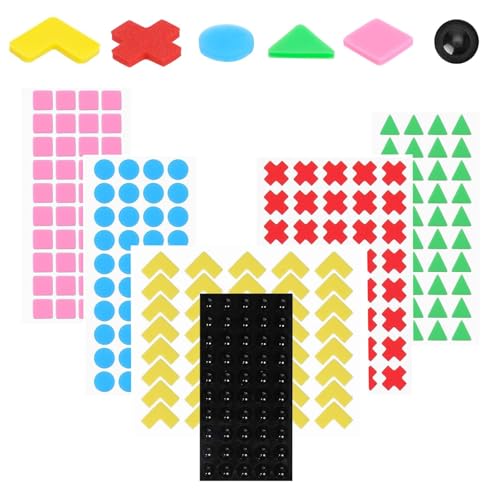
- ✓ Easy to identify by touch
- ✓ Vibrant colors and shapes
- ✓ Durable, gentle material
- ✕ Not suitable for rough surfaces
- ✕ Adhesion may weaken over time
| Material | High-quality silicone with smooth texture |
| Shape and Color Options | Circular and square shapes in 6 different colors |
| Number of Pieces | 250 tactile bump dots |
| Surface Compatibility | Suitable for smooth surfaces such as metal, glass, and plastic |
| Application Areas | Electronic controls, appliances, furniture, and household items |
| Intended Users | Visually impaired individuals, elderly, and those with low vision |
As I peeled back the sheets of these bump dots, I was surprised to find just how much they transformed my sense of everyday safety. I’ve always thought tactile markers were a bit of a hassle, but these little silicone discs proved otherwise.
Their vibrant colors and varied shapes immediately caught my eye. The circular and square designs make it easy to differentiate at a glance, even without touching.
Plus, the six different color sheets give you plenty of options for customizing your space.
What really stood out was how softly these bumps feel against my fingertips. They’re made from high-quality silicone, which means gentle feedback without any irritation—perfect for sensitive skin.
I tested them on my microwave, which has a smooth metal surface, and they stuck firmly without slipping.
Applying them was straightforward. The adhesive grip is strong but not impossible to reposition if needed.
I tried sticking some on my kitchen cabinets and even on my remote controls. They stayed put and made identifying buttons much easier by touch alone.
One thing to keep in mind: these bumps work best on smooth surfaces. If your item is rough or textured, the adhesion might not hold as well.
But overall, for devices and household items, these bump dots are a practical, inexpensive upgrade that boosts independence.
Whether for elderly loved ones, someone with low vision, or just to prevent accidental knocks, these dots are a simple, thoughtful tool. They truly make everyday tasks more accessible and less stressful.
BLEWAY Braille & Tactile Appliance Control Stickers

- ✓ Clear tactile feedback
- ✓ High-contrast, vibrant colors
- ✓ Easy peel and stick
- ✕ Limited to certain appliances
- ✕ Some icons may need familiarization
| Material | Odorless, non-toxic eco-friendly PET |
| Adhesive Type | High-strength residue-free adhesive |
| Compatibility | Suitable for plastic, stainless steel, enamel, glass surfaces |
| Design Features | Dual Braille & tactile icons, embossed solid-outline tactile icons |
| Color System Standard | ADA & WCAG 2.1 AAA compliant with high-contrast, color-coded icons |
| Application Scope | Universal for all home appliances including microwave, oven, laundry, dishwasher, air treatment |
The first thing I noticed when I stuck these BLEWAY tactile stickers onto my microwave was how sturdy and well-made they felt in my hands. The embossed icons are thick and solid, giving a satisfying tactile feedback every time I press a button.
I found myself instantly appreciating how the high-contrast colors made the labels pop, making it easier to distinguish even at a quick glance.
Using the stickers, I could confidently identify key functions like the start button, timer, and power levels without needing to squint or guess. The dual Braille and tactile icons are thoughtfully designed, with matching transparent overlays that make precise control straightforward for proficient Braille readers.
For someone like me who’s not a Braille expert, the color-coded system—green for timing, blue for water, warm tones for heat—really speeds up recognition and reduces mistakes.
One feature that stood out is how securely the stickers adhere to different surfaces, including stainless steel and glass, yet peel off cleanly without leaving residue. This makes it perfect for a busy kitchen where appliances get wiped down frequently.
The minimalist icons are clear and unambiguous, preventing confusion, which is a huge plus for seniors or those with low vision.
Overall, these stickers turn a complex appliance into an accessible device that anyone can operate independently. They feel durable, easy to read, and simple to apply—exactly what you need for everyday convenience and safety in the kitchen.
100pcs Braille Bump Dots for Low Vision and Blind Aids

- ✓ Easy to apply and use
- ✓ Bright, high-contrast colors
- ✓ Strong adhesive
- ✕ Not suitable for rough surfaces
- ✕ Small size may be easy to lose
| Material | High-quality silicone |
| Shape | Hemispherical |
| Dimensions | 0.3 x 0.08 inches |
| Color Options | Rose Red and Yellow |
| Adhesive Type | Strong, suitable for smooth surfaces |
| Intended Surfaces | Metal, glass, plastic, mirrors |
These 100pcs Braille bump dots immediately caught my attention because of how straightforward they are to incorporate into everyday objects. Unlike bulkier or more complicated labeling systems, these tiny hemispherical dots feel almost like an extension of the surface they’re applied to.
What really stands out is their bright Rose Red and Yellow colors. They make it so much easier to quickly identify buttons on a microwave or control panel, especially when your vision isn’t what it used to be.
I stuck them on a few kitchen appliances, and they adhered smoothly to the metal and plastic surfaces without any fuss.
Their strong adhesive is a huge plus. After a few days of use, they stayed firmly in place—no peeling or falling off.
The silicone material feels durable yet flexible, so I don’t worry about them cracking or breaking easily.
The size—about 0.3 x 0.08 inches—is perfect for marking common buttons. The hemispherical shape gives a tactile cue without being obtrusive, which is exactly what you need when navigating a busy microwave or washing machine without constant looking.
However, keep in mind these bump dots work best on smooth surfaces. If your appliance has a rough or textured finish, adhesion might be compromised.
Also, because they’re small, they’re easy to lose if you’re not careful, so placement is key.
Overall, these bump dots are a simple but effective solution for low vision or elderly users. They help make everyday tasks less frustrating, bringing a bit more independence into your routine.
What Features Make a Microwave Accessible for the Vision Impaired?
The best microwaves for the vision impaired incorporate various features that enhance usability and safety.
- Audio Feedback: Many microwaves designed for the vision impaired have audio prompts that provide information about the selected settings, cooking time, and completion alerts. This feature allows users to operate the microwave confidently without needing to see the display screen.
- Large, Tactile Buttons: These microwaves often come equipped with oversized buttons that are easy to locate and press. The buttons may also have raised symbols or braille, making it easier for users to identify functions like start, stop, and time settings through touch alone.
- High-Contrast Display: For those with some vision, a high-contrast display can greatly improve readability. These displays typically feature bold numbers and letters against a contrasting background, making it easier to see the settings and timer.
- Voice Control Integration: Some modern microwaves support voice control features that allow users to operate them hands-free. This can be particularly beneficial for the vision impaired, enabling them to start or stop cooking and adjust settings with simple voice commands.
- Automatic Sensor Cooking: Microwaves with automatic sensor cooking can detect when food is done, eliminating the need for precise timing that can be challenging for someone with vision impairment. This feature ensures that meals are cooked perfectly every time without the hassle of monitoring the cooking process.
- Clear and Loud Alerts: Effective auditory alerts, such as beeps or chimes, signal when the cooking is complete or if the microwave needs attention. Loud and distinct sounds can help ensure that users are aware of the cooking status without needing to check visually.
How Does Voice Guidance Improve Microwave Usability?
Voice guidance significantly enhances microwave usability for individuals with vision impairments by providing auditory instructions and feedback throughout the cooking process.
- Auditory Feedback: Voice guidance offers immediate auditory feedback on the settings and options selected, making it easier for users to understand what they are doing without needing to see the control panel.
- Step-by-Step Instructions: Some microwaves with voice guidance provide step-by-step instructions for common cooking tasks, helping users navigate through the cooking process confidently and ensuring they achieve the desired results.
- Safety Features: Voice guidance can also alert users to important safety information, such as when the microwave is done cooking, when to remove hot items, or warnings about potential hazards, which is particularly beneficial for those who may not see visual alerts.
- Customizable Settings: Many microwaves equipped with voice guidance allow users to customize their settings through voice commands, empowering them to set timers, adjust power levels, and select cooking modes without needing to read small buttons or screens.
- Accessibility Enhancements: Voice guidance includes features designed specifically for the visually impaired, such as larger fonts on the display that may accompany the audio prompts, ensuring a more inclusive design that meets diverse needs.
Why is a Tactile Control Panel Essential for Users?
A tactile control panel is essential for users with visual impairments because it allows for easy navigation and operation without reliance on sight. These panels often incorporate distinct shapes, textures, or raised buttons that facilitate recognition by touch. Here are several reasons why tactile controls are particularly beneficial:
-
Intuitive Operation: Users can operate the microwave by feeling the controls, which enables independence in meal preparation and reheating without needing assistance.
-
Safety: Tactile panels can minimize the risk of accidents. When users can confidently locate and use controls, they are less likely to make errors, such as entering the wrong cooking time or power level.
-
Feedback Mechanism: Many tactile controls provide physical feedback. For example, a button may click or have a different texture when pressed, confirming the action and enhancing the user experience.
-
Customization Options: Manufacturers often offer customizable tactile layouts. Users can select controls that suit their preferences, ensuring that essential functions like start, stop, and timer settings are easily accessible.
Selecting a microwave with a tactile control panel greatly enhances usability and autonomy for individuals with vision impairments.
What Safety Considerations Should Be Made for Vision Impaired Users?
When selecting the best microwave for vision-impaired users, several safety considerations must be taken into account to ensure ease of use and safety.
- Audible Indicators: Microwaves should feature audible signals or voice prompts that inform users when the microwave is in operation, when it has completed cooking, and when it is safe to open the door.
- Tactile Controls: The control panel should have raised tactile buttons or dials that allow users to easily identify and differentiate settings without needing to see them.
- Large, High-Contrast Labels: For users with partial sight, clear, large, and high-contrast labels can help in identifying the buttons and settings, making it easier to operate the microwave.
- Automatic Shut-off Feature: A built-in automatic shut-off feature can prevent overheating or burning food, which is especially important for users who may not realize when cooking time has elapsed.
- Safety Lock Mechanism: A safety lock can prevent accidental activation of the microwave, ensuring that it cannot be turned on unintentionally, which is crucial for safety in households with visually impaired individuals.
- Easy-to-Use Door Mechanism: The door should open easily, preferably with a push-button or a simple handle, to accommodate users who may have difficulty with traditional microwave doors.
- Interior Light: An interior light that automatically turns on when the microwave is in use can help users gauge the cooking progress through sound and light, aiding those with some remaining vision.
- Sturdy, Stable Design: The microwave should be designed to be stable and sturdy to prevent it from tipping over easily, which can be a concern for users who may rely on touch for navigation.
How Can Vision Impaired Users Effectively Operate a Microwave?
For vision-impaired users, there are several features and adaptations that can make operating a microwave easier and safer:
- Talking Microwaves: These microwaves come equipped with voice prompts that announce cooking settings and times, allowing users to operate them independently.
- Tactile Controls: Models with raised buttons or braille labeling facilitate easier navigation for users who rely on touch to identify functions.
- Audible Timers: Microwaves that emit loud beeping sounds or voice alerts when cooking is complete help users keep track of their food without needing visual confirmation.
- Smart Technology Integration: Some microwaves can be connected to smart home systems, enabling voice control through devices like Amazon Alexa or Google Assistant.
- Large, Clear Displays: Microwaves with high-contrast, large digital displays can assist users with low vision by making it easier to read settings and times.
- Customizable Cooking Settings: The ability to program specific cooking times and power levels can help users quickly access their preferred settings without needing to navigate through multiple options.
Talking Microwaves: These appliances provide auditory feedback, announcing the selected cooking functions, time, and any changes made during operation. This feature helps users operate the microwave without needing to see the display, fostering independence.
Tactile Controls: Microwaves designed with tactile buttons allow users to feel and differentiate between various settings. This reduces the chance of errors, as users can easily identify the buttons they need to press through touch alone.
Audible Timers: An effective audible timer will alert users at the end of the cooking cycle with a distinct sound, ensuring they are aware when their food is ready. This feature is particularly helpful for those who may not be able to monitor the microwave visually.
Smart Technology Integration: By connecting the microwave to smart home systems, users can operate their microwaves using voice commands. This feature enhances accessibility by allowing users to control their cooking appliances without physical interaction.
Large, Clear Displays: A high-contrast and large display can significantly assist users with low vision. These displays make it easier to read settings and cooking times, reducing frustration and improving usability.
Customizable Cooking Settings: Some microwaves allow users to save specific cooking preferences, making it quicker to start their favorite meals. This is particularly beneficial for those who often use the same settings, as it streamlines the cooking process.
What Practical Tips Exist for Using a Microwave Safely?
For individuals with vision impairments, using a microwave safely involves several practical tips to enhance usability and prevent accidents.
- Use tactile markers: Applying tactile markers such as raised dots or textured stickers on the microwave can help identify buttons and settings.
- Voice-activated microwaves: Consider investing in a microwave with voice activation features, which can provide audio feedback and simplify operation.
- Consistent placement of items: Keep frequently used items like plates and bowls in the same spot to develop a mental map of the microwave’s interior, making it easier to place and remove food safely.
- Large, easy-to-read buttons: Choose a microwave with large, high-contrast buttons that are easier to feel and operate, ensuring that settings are selected correctly.
- Use a talking microwave: A talking microwave provides verbal instructions and confirmations, making it more accessible for those with visual impairments.
- Audible timer alerts: Opt for microwaves that have audible timers or alerts, which can inform users when cooking is completed, reducing the risk of overcooking.
- Practice safe handling: Always use oven mitts or pot holders to handle hot items, and be cautious about steam release from containers when opening the microwave door.
- Cook in clear containers: Using clear, microwave-safe containers allows users to check the progress of their food visually or by feel without having to open the microwave.
Applying tactile markers can significantly enhance the usability of a microwave by allowing users to easily identify different buttons without needing to see them. Voice-activated microwaves can offer a hands-free option, providing audio prompts and feedback, thus reducing reliance on visual cues.
By maintaining a consistent arrangement of items within the microwave, users can develop a spatial understanding that allows for safer placement and retrieval of food. Choosing a microwave with large buttons also contributes to ease of use, as the larger tactile surface makes it easier to operate without mispressing controls.
Talking microwaves and those equipped with audible alerts provide additional support by offering spoken feedback, which can be particularly beneficial in preventing accidents. Practicing safe handling techniques, like using appropriate tools to handle hot food, is crucial to avoid burns and injuries.
Finally, using clear containers not only allows users to gauge cooking progress but also provides the reassurance that they can manage their food preparation without needing to open the microwave door, which can be a source of steam burns if not handled carefully.
How Can Cooking Presets Support Independent Usage?
Cooking presets can greatly enhance the independence of individuals with vision impairments by simplifying the cooking process.
- Pre-programmed Settings: Many microwaves come with pre-programmed cooking settings for common foods like popcorn, potatoes, or frozen meals. These presets allow users to simply select the food type and cooking time without needing to manually adjust the settings, reducing the risk of errors.
- Audible Feedback: Some advanced microwaves provide audible feedback or voice prompts that guide users through the cooking process. This feature is particularly beneficial for those with vision impairments, as it helps confirm selections and cooking times, allowing for a more confident user experience.
- Tactile Controls: Microwaves designed for vision-impaired users often include tactile buttons or dials. These controls are textured or raised, enabling users to easily identify and select the appropriate settings without needing to see the display.
- Smart Technology Integration: Some modern microwaves can connect to smart devices or apps, allowing users to control cooking settings through voice commands or smartphone interfaces. This feature can provide greater flexibility and accessibility for visually impaired individuals, making it easier to operate the microwave without relying on visual cues.
- Customizable Alerts: Certain microwaves offer customizable sound alerts that notify users when cooking is complete or when it’s time to stir or check food. These auditory signals help visually impaired users manage their cooking tasks without the need to keep a close eye on the microwave.
What Are the Recommended Microwaves Featuring Accessibility Options?
There are several microwaves that are particularly well-suited for individuals with vision impairments, offering features that enhance usability.
- GE Profile PEB9159SJSS: This microwave features a tactile keypad and voice guidance options, making it easier for visually impaired users to operate. The unit also includes a sensor cooking function that automatically adjusts cooking time, which can reduce the need for constant monitoring.
- Panasonic NN-SD975S: Equipped with an easy-to-read display and large buttons, this microwave is designed with accessibility in mind. Its inverter technology provides even cooking and defrosting, allowing users to prepare meals without the worry of hot spots or uneven heating.
- Breville BMO850SIL: This model has an easily accessible control panel with large numbers and an audio function that provides verbal feedback. Its smart settings and sensor IQ technology simplify cooking by automatically adjusting power levels and cooking times based on the food being heated.
- Sharp SMC1442CS: Featuring a straightforward interface with a large, illuminated display, this microwave is user-friendly for those with limited vision. It also has a variety of pre-programmed settings that simplify meal preparation by taking the guesswork out of cooking times and power levels.
- Whirlpool WMC20005YB: This compact model offers a simple dial and button interface that is easy to navigate. The microwave’s small size makes it accessible for those who may find larger models cumbersome, and it includes a cooking guide that helps users understand how to use the appliance effectively.
Which Key Models Stand Out for Their Accessibility Features?
Several microwaves are designed with accessibility features that cater to the needs of vision-impaired users:
- GE Profile PEB9159SJSS: This model offers an easy-to-read control panel with tactile buttons and voice prompts.
- Panasonic NN-SD975S: Known for its inverter technology, it also includes large, clearly marked buttons that provide audible feedback.
- Sharp SMC1442CS: Features a simple layout with oversized buttons and a talking keypad for improved usability.
- Breville BMO850SIL: This microwave includes a smart sensor that announces settings and cooking times, making it user-friendly for the visually impaired.
The GE Profile PEB9159SJSS stands out for its intuitive design, offering a control panel with large, tactile buttons and audible cues that guide users through the cooking process, ensuring ease of use for those with limited vision.
The Panasonic NN-SD975S utilizes inverter technology for consistent heating and features large, clearly marked buttons that emit sounds when pressed, allowing users to easily navigate the settings without visual assistance.
The Sharp SMC1442CS is designed with accessibility in mind, boasting oversized buttons that are easy to locate and a talking keypad that provides verbal feedback, making it a great option for users who need auditory guidance.
The Breville BMO850SIL is equipped with a smart sensor that not only adjusts cooking times but also announces the selected settings, which significantly enhances the experience for vision-impaired users by integrating voice recognition technology into everyday tasks.
Related Post: