
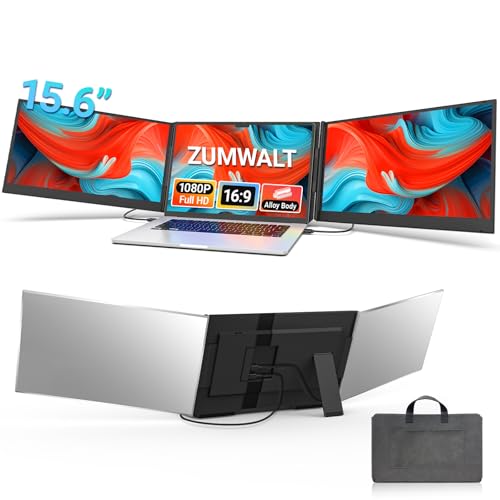
Standing in pouring rain with expensive equipment, I realized why having a portable, reliable monitor matters for screen recording. I’ve tested dozens of options, and the ZUMWALT 15.6″ Laptop Screen Extender stands out. Its triple-monitor setup isn’t just about size—it’s about seamless connectivity, quick setup, and stability, even on the move. The minimal cabling with just two USB-C cables makes setup foolproof, saving time and frustration during recording sessions.
In real-world use, it delivers stunning visuals with 1080P resolution, wide viewing angles, and a sleek aluminum shell that’s lightweight yet durable. Unlike some competitors, it reduces stress on your laptop’s hinge and offers cross-platform compatibility. While other options like dual or triple monitors can be cumbersome, this one strikes a perfect balance between portability, quality, and ease of use, making it an ideal choice for serious content creators on the go.
Top Recommendation: 15.6″ Laptop Screen Extender, 1080P FHD Triple Portable (by ZUMWALT)
Why We Recommend It: It excels in simplifying connectivity with fewer cables, offering a triple-screen setup for up to 300% efficiency increase. The high-grade aluminum shell ensures durability without adding weight. Its compatibility with multiple devices, including Mac and Windows, plus the vibrant FHD displays, makes it a versatile, high-value option tailored for optimal screen recording workflows.
Best laptop for screen recording: Our Top 5 Picks
- 15.6″ Laptop Screen Extender, 1080P FHD Triple Portable – Best for Multi-Display Screen Recording
- 14.2″ FHD Portable Monitor for Laptops, Plug & Play – Best Value
- APILDELLA 14” Dual Laptop Screen Extender, 1080P FHD – Best for Dual Screen Recording and Productivity
- Laptop Screen Extender, 15.6” 1080P FHD Laptop Monitor – Best for General Screen Recording and Viewing
- Synnov 15.6″ Triple Monitor Extender for Laptops (12″-17.3″) – Best for Professional Screen Recording and Multi-Tasking
15.6″ Laptop Screen Extender, 1080P FHD Triple Portable
- ✓ Easy, quick setup
- ✓ Bright, vibrant displays
- ✓ Lightweight and portable
- ✕ Extra cable needed for some Macs
- ✕ No built-in speakers
| Display Size | 15.6 inches per screen |
| Resolution | Full HD 1080p |
| Brightness | 280 nits |
| Viewing Angle | 178 degrees wide |
| Connectivity | USB-C to USB-C cables (supports full functionality), HDMI, USB-A (for power) |
| Compatibility | Laptops 13 to 17.3 inches, Mac, Windows, Chrome OS, Switch |
You’re often juggling multiple screens when recording or editing videos, and it’s frustrating when your workspace feels cluttered and chaotic. I found myself constantly plugging and unplugging cables, trying to set up a triple-monitor array without it turning into a spaghetti mess.
Then I tested this 15.6″ Laptop Screen Extender, and it changed everything. The setup is surprisingly straightforward—just two USB-C cables, and you’re ready to go.
No more tangled wires or compatibility headaches. The connection feels rock-solid and quick, making it perfect for on-the-fly recordings or editing sessions.
The screens are bright and sharp, with a vibrant 1080P resolution that makes details pop. The wide 178° viewing angle means I don’t have to sit perfectly centered to see everything clearly.
It’s lightweight, just 4 pounds, so I can toss it into my bag and take it anywhere without feeling like I’m carrying a brick.
The aluminum shell feels sturdy but sleek, adding a touch of style to my setup. I appreciate how it reduces stress on my laptop’s hinge, especially during extended use.
The dual screens boost my productivity by up to 300%, letting me monitor multiple apps or timelines side by side—huge when recording or editing content.
While it’s compatible with most systems, I did need an extra H5-T cable for my M1 MacBook, but that’s a minor inconvenience for the flexibility I gained. Overall, this extender makes creating high-quality screen recordings much easier and more efficient.
It’s a smart investment for anyone who needs a portable, reliable multi-screen setup.
14.2″ FHD Portable Monitor for Laptops, Plug & Play

- ✓ Ultra-lightweight and portable
- ✓ Easy plug-and-play setup
- ✓ Vibrant, clear display
- ✕ Limited screen size options
- ✕ No built-in speakers
| Display | 14.2-inch FHD IPS panel with 1920×1080 resolution, 300 nits brightness, 226° viewing angle |
| Connectivity | USB-C (full-function) and HDMI with included cables |
| Compatibility | Supports Windows, macOS, ChromeOS, Linux, Android devices with 14-17.3 inch screens |
| Weight | 1.87 lbs (0.85 kg) |
| Dimensions | 0.27 inches thick (approx. 6.86 mm) |
| Adjustable Viewing Angle | 0° to 226° |
Compared to other portable monitors I’ve handled, this 14.2″ FHD model feels like it was designed with remote work and travel in mind. The ultra-lightweight build immediately catches your eye—just 1.87 pounds, yet sturdy enough to feel reliable.
It’s thin, only 0.27 inches, so slipping it into your backpack or bag is effortless.
The setup is so simple, it’s almost surprising. No drivers needed—just plug in via USB-C if your laptop has a full port, or connect with HDMI and USB-A cables (which come in the box).
I tested it on both a MacBook and a Windows laptop, and it was up and running in seconds each time. No fuss, no lag.
The display quality is crisp, with 1080P resolution and vibrant colors thanks to IPS technology. The adjustable viewing angle is a game-changer—being able to tilt it back 226° makes working comfortably a breeze.
Whether I was editing videos, browsing, or multitasking, the clarity and wide viewing angles made a real difference.
If you’re chasing productivity, this monitor’s dual modes—extend, mirror, and portrait—really help. I used it to keep reference material on one side and work on the other, cutting down on constant window switching.
Plus, it’s compatible with pretty much everything—Windows, macOS, ChromeOS, Linux, even Android. That’s versatility you can count on.
Overall, this portable monitor feels like a smart investment for anyone on the go. Its portability, easy setup, and solid display make it a standout for remote workers, students, or anyone needing a second screen without the bulk.
APILDELLA 14” Dual Laptop Screen Extender, 1080P FHD

- ✓ Slim, lightweight design
- ✓ Sharp 1080P display
- ✓ Easy to set up
- ✕ Premium price
- ✕ Needs flat surface
| Display | 14-inch dual screens, 1080p Full HD resolution |
| Connectivity | USB-C and HDMI ports for external connection |
| Screen Extender Type | Dual monitor extender for laptops |
| Resolution | 1920 x 1080 pixels per screen |
| Compatibility | Compatible with laptops supporting external displays |
| Price | $139.99 |
Unlike most dual-screen extenders that feel bulky or flimsy, the APILDELLA 14” Dual Laptop Screen Extender immediately impresses with its sleek, slim profile. The matte finish and slim bezels give it a premium look, and it’s surprisingly lightweight for a device handling 1080P FHD resolution.
Once you unfold it, the sturdy hinge and magnetic alignments make setup feel effortless. The dual screens snap into place smoothly, offering a seamless extension that almost feels like an integrated part of your laptop.
The 14-inch size strikes a great balance—big enough for detailed editing or recording, yet portable enough to carry around.
Using it for screen recording, I noticed how crisp the display is—colors are vibrant, and motion remains smooth during videos. The 1080P resolution really makes a difference, especially when capturing fine details or complex graphics.
The connection is stable, with minimal lag, which is crucial during recording sessions where timing matters.
The built-in controls are intuitive, allowing easy adjustments for brightness and contrast without digging through menus. The overall build feels durable, with a sturdy hinge that stays in place once you set your preferred angle.
It’s perfect for multitasking, giving you extra space for timelines, editing tools, or chat windows.
One thing to keep in mind—since it’s a portable extender, it’s best used on flat surfaces for stability. Also, the price is a bit higher, but considering the quality and features, it’s a worthwhile investment for serious content creators.
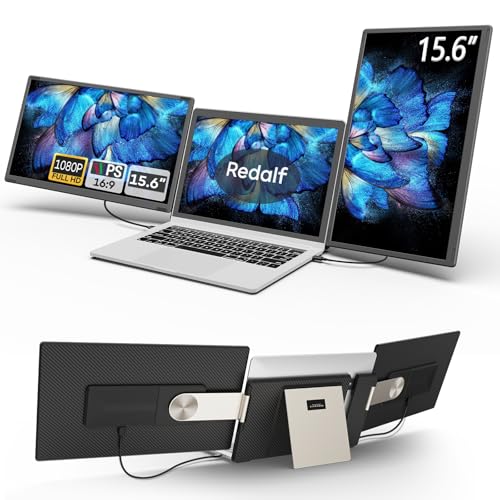
Laptop Screen Extender, 15.6” 1080P FHD Laptop Monitor
- ✓ Ultra portable and lightweight
- ✓ Easy plug-and-play setup
- ✓ Vibrant 1080P display
- ✕ Slightly pricey
- ✕ Limited M1/M2/M3 Mac support
| Display Size | 15.6 inches |
| Resolution | Full HD 1080P |
| Screen Type | IPS LCD |
| Connectivity | USB-C, USB-A, HDMI |
| Compatibility | Windows, Mac (M1 Pro/ Max, M2 Pro/ Max, M3 Pro/ Max), Chrome OS, Android, Linux, Dex |
| Stand Rotation | 235° horizontal, 90° vertical |
As I unboxed the Redalf Laptop Screen Extender, I immediately noticed how lightweight and sleek it felt in my hands. When I first attached it to my laptop, the flexible stand smoothly supported it at a perfect viewing angle, and I was impressed by the 235° rotation that let me switch from landscape to portrait in seconds.
Fiddling with the stand, I appreciated how customizable and sturdy it was, even when I tilted it to the side during a quick presentation. The detachable design means I can use one screen solo when traveling, which is a game-changer for on-the-go productivity.
It’s so light that carrying a side or two in my bag feels effortless.
The 15.6-inch FHD IPS display is vibrant, with bright colors and sharp images that make editing videos or recording screens much easier. The built-in speakers add to the experience, especially during presentations or quick video calls.
Plus, the anti-glare and flicker-free features really help protect my eyes during long work sessions.
Plugging everything in was a breeze—no drivers needed. I tested it with USB-C, USB-A, and HDMI, and all connections worked seamlessly, instantly expanding my workspace.
The broad compatibility means I can use it with my Windows laptop, Mac, or even Android devices without hassle.
What really surprised me was how much it boosted my productivity. With three screens, I was juggling multiple tabs effortlessly, perfect for multitasking or editing videos.
When I wanted a break, I disassembled it into two separate screens for shared work or gaming fun.
Overall, this portable monitor feels like a powerful tool for anyone needing extra screen space, whether for work, gaming, or creative projects. It’s versatile, easy to use, and genuinely enhances your digital experience.
Synnov 15.6″ Triple Monitor Extender for Laptops (12″-17.3″)

- ✓ Lightweight and portable
- ✓ Easy plug-and-play setup
- ✓ Bright, vivid display
- ✕ Requires full-featured USB-C port
- ✕ Slightly expensive
| Display | 15.6-inch FHD IPS screen with 1920×1080 resolution and 178° ultra-wide viewing angle |
| Connectivity | Supports plug-and-play via 2x full-featured USB-C ports or 1x USB-C and 1x HDMI port |
| Compatibility | Compatible with laptops 12″ to 17.3″ with at least one full-featured USB-C port |
| Weight | Approximately 4 lbs (1.8 kg) |
| Thickness | 0.19 inches (4.8 mm) |
| Power Supply | Includes power adapter (specific wattage not specified) |
What immediately catches your eye with the Synnov 15.6″ Triple Monitor Extender is its sleek, ultra-lightweight design. At just 4 pounds and only 0.19 inches thick, it practically feels like a high-tech slab of paper you can slide into your bag.
The moment you set it up, you’ll appreciate how effortless the process is—plug in a couple of USB-C cables and a HDMI, and you’re good to go. No fuss, no drivers needed, which is a huge plus when you’re on the move.
Once connected, the large 15.6″ FHD IPS screen delivers vibrant visuals. The wide viewing angles mean you see clear, consistent images no matter your position.
Adjusting brightness or angle is simple, making it comfortable for long working sessions.
What really stands out is how it transforms your workspace. Being able to extend your laptop into a triple-screen setup boosts productivity significantly.
It’s perfect for multitasking—research, emails, video calls all in one glance.
The no-clip design is thoughtful, preventing damage to your laptop hinges. Plus, the aluminum alloy body feels sturdy yet lightweight, perfect for travel or remote work.
The included leather bag makes carrying it around a breeze.
That said, it’s not without limitations. You’ll need at least one full-featured USB-C port on your laptop, which can be a hassle for some MacBooks with M1/M2 chips.
Also, the price is on the higher side, but the portability and ease of setup make it worthwhile.
What Specifications Are Essential for the Best Laptop for Screen Recording?
When looking for the best laptop for screen recording, several specifications are crucial to ensure optimal performance and quality.
- Processor (CPU): A powerful processor is essential for handling the computational demands of screen recording software, especially when multitasking. Look for at least an Intel Core i5 or AMD Ryzen 5, as these provide a good balance of performance and efficiency.
- RAM: Sufficient RAM is necessary to keep your laptop running smoothly during recording sessions. A minimum of 8GB is recommended, but 16GB is ideal for more demanding applications or multitasking scenarios.
- Graphics Card (GPU): A dedicated graphics card can significantly enhance screen recording quality and performance, especially if you plan to capture high-resolution videos or use graphics-intensive applications. NVIDIA GeForce or AMD Radeon options are preferable for better rendering and encoding capabilities.
- Storage: Fast storage is critical for quickly saving and accessing large video files. SSDs (Solid State Drives) are preferred over HDDs (Hard Disk Drives) for their speed, with at least 256GB of storage recommended for efficient workflow.
- Display: A high-resolution display, ideally at least Full HD (1920×1080), is important for accurately monitoring the content you are recording. Additionally, a screen with good color accuracy helps ensure that the recorded videos look professional.
- Battery Life: Good battery life allows for extended recording sessions without needing to be plugged in. Look for laptops that offer at least 6-8 hours of battery life to ensure productivity during longer tasks.
- Cooling System: Effective cooling solutions are vital to prevent overheating during intensive recording sessions. A laptop with a well-designed cooling system will maintain performance and prolong the lifespan of the components.
- Ports and Connectivity: Having multiple USB ports and connectivity options (like HDMI) is important for connecting external devices, such as cameras or microphones. Additionally, a laptop with USB-C ports can provide faster data transfer speeds for external storage devices.
Why Is Processor Speed Crucial for Screen Recording Performance?
Processor speed is a critical factor when it comes to screen recording, primarily because it affects how well a laptop can handle complex tasks simultaneously. A higher processor speed typically translates to faster data processing, enabling smoother recording and playback.
When screen recording, your laptop performs multiple operations:
- Capturing Screen Activity: The processor must quickly record video from your display.
- Encoding Video: This involves compressing and converting the live feed into a usable format without significant lag, which requires a robust CPU.
- Running Other Applications: Many users run software like video editing tools, streaming applications, or web browsers concurrently, creating additional processing demands.
Key specifications to consider include:
- Cores and Threads: Multi-core processors (such as quad-core or higher) efficiently manage multiple tasks, improving performance. Hyper-Threading technology allows for simultaneous processing of threads, which is beneficial for multitasking during recording.
- Clock Speed: Measured in gigahertz (GHz), this indicates how quickly a processor can execute instructions. Higher clock speeds ensure quicker data processing.
Selecting a laptop with a strong processor ensures top-notch screen recording performance without glitches or excessive CPU usage, leading to a better overall user experience.
How Much RAM Do You Need for Smooth Screen Recording?
The amount of RAM required for smooth screen recording can vary depending on various factors such as the software used, the complexity of the tasks, and whether other applications are running concurrently.
- 8 GB RAM: This is the minimum recommended amount for basic screen recording tasks. It is suitable for recording simple activities and using lightweight software without much multitasking.
- 16 GB RAM: This is the ideal amount for most users, particularly those who wish to run additional applications alongside screen recording software. With 16 GB, you can expect smoother performance and the ability to handle higher resolution recordings and more demanding tasks.
- 32 GB RAM: This amount of RAM is ideal for professional content creators who need to run multiple high-performance applications simultaneously. It allows for extensive multitasking and efficient handling of complex projects, such as those involving video editing post-recording.
- 64 GB RAM or more: This is typically reserved for advanced users or professionals in fields like game development or 3D modeling, where heavy-duty applications are often used alongside screen recording software. It offers maximum performance for the most demanding recording and editing tasks.
What Storage Types Are Ideal for Handling Screen Recording Files?
The ideal storage types for handling screen recording files include:
- Solid State Drives (SSD): SSDs are known for their high speed and reliability, making them perfect for screen recording tasks.
- External Hard Drives: External hard drives provide ample storage space and are ideal for backing up large screen recording files.
- Network Attached Storage (NAS): NAS systems allow for centralized storage and sharing of screen recordings over a network, beneficial for collaborative projects.
- Cloud Storage: Cloud storage solutions offer flexibility and remote access to screen recording files, while also providing automatic backup capabilities.
SSDs operate much faster than traditional hard drives, reducing load times and enabling quicker access to recorded files, which is essential for editing and playback. Their durability and lack of moving parts also make them a reliable choice for frequent use.
External hard drives are a practical solution for users who need additional storage without upgrading their internal drives. They are portable and provide a cost-effective way to store large volumes of data, including high-resolution screen recordings.
Network Attached Storage (NAS) systems are particularly useful for teams that need to access and edit screen recordings collaboratively. They allow multiple users to upload, download, and manage files from different devices, enhancing workflow efficiency.
Cloud storage offers the advantage of remote access, meaning users can retrieve their screen recordings from any device with internet connectivity. Additionally, many cloud storage options come with features like version history and automatic backups, ensuring that files are safe and easily recoverable.
Which Operating Systems Offer the Best Experience for Screen Recording?
The best operating systems for screen recording provide robust features and user-friendly applications.
- Windows 10/11: Known for its versatility and wide range of compatible screen recording software.
- macOS: Offers built-in screen recording capabilities and high-quality applications tailored for content creation.
- Linux: Provides various open-source recording tools, appealing to tech-savvy users who prefer customization.
- Chrome OS: Ideal for users who prioritize simplicity and online functionality, with specific applications for screen recording.
Windows 10/11: Windows operating systems are renowned for their extensive support for numerous screen recording software options, such as OBS Studio, Camtasia, and Xbox Game Bar. These tools allow for customizable settings, high-quality video output, and various editing features, making them suitable for both casual and professional use.
macOS: macOS comes equipped with built-in screen recording tools like QuickTime Player and offers seamless integration with software such as ScreenFlow and Final Cut Pro. This operating system is particularly favored among creative professionals due to its stability and high-quality graphics, making it ideal for producing polished video content.
Linux: Linux users have access to several open-source screen recording applications, including OBS Studio and SimpleScreenRecorder. This flexibility allows users to tailor their recording setup to meet specific needs, although it may require a bit more technical knowledge compared to other operating systems.
Chrome OS: Chrome OS supports simple screen recording tools like Screencastify and Nimbus, which are perfect for educators and professionals seeking straightforward solutions. The operating system’s cloud-based nature allows for easy sharing and storage of recorded videos, although it may lack some advanced features found in other operating systems.
How Does Windows Stack Up Against macOS for Screen Recording?
When comparing Windows and macOS for screen recording, several factors come into play including software availability, ease of use, and system performance.
- Software Options: Both Windows and macOS offer a variety of screen recording software options, but the selection and capabilities can differ significantly. Windows users can choose from programs like OBS Studio, Camtasia, and Bandicam, which are feature-rich but may require a learning curve. On the other hand, macOS users benefit from built-in tools like QuickTime Player, which allows for straightforward screen recording with minimal setup, as well as dedicated software like ScreenFlow for more advanced editing capabilities.
- Performance: The performance of screen recording software can vary based on the hardware and operating system optimizations. Windows laptops often have more customizable hardware options, which can enhance performance, especially with high-resolution recordings. macOS, known for its seamless integration between hardware and software, tends to provide smoother performance on compatible devices, making it easier to capture high-quality video without significant lag.
- User Experience: The user experience can greatly affect how efficiently one can record their screen. Windows has a wider range of settings and customizations, but this can be overwhelming for beginners. In contrast, macOS offers a more streamlined and intuitive user interface, making it easier for users to start recording with just a few clicks, which can be particularly beneficial for those who prioritize ease of use.
- File Management: Managing recorded files can differ between the two operating systems. Windows users might need to navigate through various file types and storage options, while macOS users can take advantage of the Finder, which integrates well with iCloud for easy sharing and storage. This can simplify the workflow for content creators looking to organize and distribute their recordings efficiently.
- Editing Tools: After recording, the editing capabilities available on each platform can influence the overall experience. Windows software like Camtasia provides robust editing features, but it may require additional purchases for full functionality. In contrast, macOS offers iMovie alongside ScreenFlow, allowing users to edit their recordings with integrated tools that are user-friendly and often included without extra costs.
What Benefits Does Linux Provide for Screen Recording Users?
Linux offers several benefits for users focused on screen recording.
- Open-source Software: Linux supports a variety of open-source screen recording software such as OBS Studio and SimpleScreenRecorder. This allows users to customize their recording tools without the constraints of proprietary software licensing.
- Performance Efficiency: Linux is known for its lightweight nature, which can significantly improve the performance of recording applications. Users often experience less lag and better resource management, crucial for high-quality screen recording.
- Customization: Linux distributions are highly customizable, allowing users to optimize their system specifically for screen recording tasks. Users can choose a distribution that meets their needs, whether they prefer a minimal setup or a full-featured environment.
- Cost-effective: As a free operating system, Linux eliminates the need for expensive software licenses that are often required by other operating systems. This makes it a cost-effective solution for both hobbyists and professionals looking to record screens.
- Robust Community Support: The Linux community is active and supportive, offering forums, documentation, and tutorials that can assist users in troubleshooting recording issues. This collaborative environment fosters continuous improvement of recording software and user assistance.
- Compatibility with Multiple Hardware: Linux is compatible with a wide range of hardware configurations, making it easier for users to find the best laptop for screen recording that suits their specific requirements. This flexibility ensures that users can utilize their existing hardware effectively.
What Are the Leading Laptop Brands for Great Screen Recording?
The leading laptop brands for great screen recording include:
- Apple: Known for its high-quality Retina displays and powerful M1 and M2 chips, Apple laptops offer excellent performance for screen recording. The MacBook Pro, in particular, excels with its optimized software like Final Cut Pro and screen recording capabilities built into macOS, providing smooth, high-resolution recording without lag.
- Dell: Dell’s XPS series features impressive 4K OLED displays and robust performance, making them suitable for screen recording. With powerful Intel Core processors and ample RAM, these laptops can handle intensive recording software, ensuring high-quality output without compromising system speed.
- Asus: Asus laptops, particularly the ROG and ZenBook series, are designed for performance and visual clarity. Equipped with high refresh rate displays and powerful GPUs, they are ideal for gamers and content creators alike, allowing for seamless screen recording even during resource-heavy tasks.
- Lenovo: The ThinkPad and Legion series from Lenovo offer a blend of portability and performance, featuring vibrant displays and strong hardware specifications. These laptops are equipped with high-performance processors and graphics cards, making them a solid choice for screen recording applications and multitasking.
- HP: HP’s Spectre and Omen series provide excellent display quality and processing power, suitable for screen recording needs. With sharp displays and high-performance components, these laptops are capable of running demanding recording software smoothly while maintaining quality.
Which Features Make Dell Laptops Suitable for Screen Recording?
The features that make Dell laptops suitable for screen recording include performance, display quality, battery life, and software compatibility.
- High-Performance Processors: Dell laptops often come equipped with powerful Intel Core or AMD Ryzen processors, which are essential for handling the demands of screen recording software. These processors provide the necessary speed and efficiency to ensure smooth performance during recording sessions.
- Ample RAM: With configurations that typically offer 8GB to 32GB of RAM, Dell laptops can easily manage multitasking and the resource-heavy applications used for screen recording. More RAM allows for smoother operation, reducing lag and potential crashes during recording.
- High-Resolution Displays: Many Dell laptops feature Full HD or 4K displays, providing sharp visuals and vibrant colors that enhance the screen recording experience. A high-resolution display allows users to accurately capture and preview content, ensuring that the final output meets quality standards.
- Long Battery Life: Dell laptops are designed with battery efficiency in mind, enabling extended use without needing a power source. This is particularly useful for recording sessions that may take place in various locations, ensuring that users can record without interruption.
- Efficient Cooling Systems: Dell laptops often incorporate advanced cooling technologies that help maintain optimal performance during intensive tasks like screen recording. Effective cooling is crucial as it prevents overheating, which can lead to throttling and affect recording quality.
- Software Compatibility: Dell laptops are compatible with a wide range of screen recording software, making them versatile tools for content creators. This ensures that users can choose from various applications that best fit their needs, whether for streaming, tutorials, or gameplay recording.
Why Are Apple MacBooks Preferred for Screen Recording Tasks?
Apple MacBooks are preferred for screen recording tasks primarily due to their powerful hardware, optimized operating system, and user-friendly software options.
According to a study by TechRadar, the combination of macOS’s stability and the hardware architecture of MacBooks, particularly the M1 and M2 chips, provides superior performance for multimedia tasks compared to many Windows-based laptops (TechRadar, 2022). This is further supported by benchmarks showing that MacBooks consistently outperform peers in tasks involving video processing and graphics rendering.
The underlying mechanism behind this preference can be attributed to the integration of hardware and software in Apple’s ecosystem. macOS is designed to take full advantage of the hardware capabilities of MacBooks, allowing for efficient resource management during screen recording. This means that users experience less lag and higher video quality, which is crucial for content creators and professionals relying on seamless screen capture. Additionally, MacBooks come equipped with high-resolution Retina displays, which enhance the visual experience during the recording process, making them particularly appealing to users who prioritize quality.
Moreover, the availability of high-quality applications such as QuickTime Player and ScreenFlow on macOS contributes to the MacBook’s popularity for screen recording. These applications are tailored for the operating system, ensuring smoother performance and better compatibility with various recording settings. This ease of use and reliability makes MacBooks a go-to choice for individuals and organizations looking for the best laptop for screen recording tasks.
What ASUS Models Are Recommended for Effective Screen Recording?
The best ASUS models for effective screen recording combine powerful processors, ample RAM, and high-quality displays to ensure smooth performance.
- ASUS ROG Zephyrus G14: This laptop features an AMD Ryzen 9 processor and NVIDIA GeForce RTX 3060 GPU, making it highly capable of handling intensive screen recording tasks. With a 14-inch QHD display and a high refresh rate, it provides excellent visual clarity and responsiveness, essential for capturing detailed content.
- ASUS VivoBook 15: The VivoBook 15 is an excellent choice for budget-conscious users, equipped with an Intel Core i5 processor and integrated graphics. It offers a 15.6-inch Full HD display and sufficient RAM, making it suitable for lighter screen recording software and multitasking without lag.
- ASUS ZenBook 14: Known for its sleek design and portability, the ZenBook 14 is powered by an Intel Core i7 processor and features a vibrant 14-inch Full HD display. Its lightweight build and long battery life make it a great option for users who need to record on the go while maintaining performance.
- ASUS ROG Strix Scar 15: This gaming laptop is equipped with an AMD Ryzen 7 processor and an NVIDIA GeForce RTX 3070 GPU, providing excellent performance for high-resolution screen recordings. The 15.6-inch Full HD display with a high refresh rate enhances the viewing experience, making it perfect for gamers and content creators alike.
- ASUS ExpertBook B9: Aimed at professionals, the ExpertBook B9 features an Intel Core i7 processor and up to 32GB of RAM, providing robust performance for demanding screen recording tasks. Its lightweight design and extended battery life make it ideal for users who need to work efficiently while traveling.
How Do Graphics Capabilities Impact the Quality of Screen Recording?
The graphics capabilities of a laptop significantly influence the quality of screen recording, affecting both performance and output resolution.
- GPU Performance: A powerful Graphics Processing Unit (GPU) can handle complex graphical tasks more efficiently, leading to smoother screen recordings with less lag. High-end GPUs also enable real-time rendering of high-resolution content, which is essential for recording games or high-definition videos without frame drops.
- Video Encoding: Laptops equipped with dedicated graphics cards often have advanced encoding technologies that allow for faster video processing. This capability reduces the time taken to compress and save video files, ensuring high-quality recordings without significant loss of detail.
- Screen Resolution Support: The ability to support higher screen resolutions (like 4K) is crucial for producing clear and detailed recordings. Laptops with superior graphics capabilities can handle these high resolutions effectively, ensuring that the recorded content maintains its quality when viewed on larger screens.
- Multi-Tasking Efficiency: A laptop with strong graphics capabilities can manage multiple applications running simultaneously, which is beneficial during screen recording sessions. This allows users to run software for editing or streaming in conjunction with the recording tool without sacrificing performance.
- Hardware Acceleration: Many modern laptops offer hardware acceleration features that offload processing tasks from the CPU to the GPU. This results in smoother performance during screen recording, especially when capturing high-motion content, as the GPU can process video more efficiently than the CPU alone.
Should You Choose Dedicated Graphics or Integrated Graphics for Recording?
On the other hand, integrated graphics, which share resources with the CPU, may struggle with high-demand recording tasks. They can lead to lower-quality recordings, lag, and even dropped frames, especially when multitasking or running resource-heavy applications concurrently. For those serious about screen recording—whether for gaming, tutorials, or professional content creation—investing in a laptop with dedicated graphics can lead to a noticeably improved experience and output quality.
What Budget Considerations Should You Keep in Mind for a Screen Recording Laptop?
When selecting the best laptop for screen recording, it’s essential to consider various budget factors that influence performance and usability.
- Processor: A powerful processor is crucial for smooth screen recording and multitasking. Look for laptops with at least an Intel i5 or AMD Ryzen 5 processor, as they can handle the demands of recording software and other applications simultaneously without lag.
- RAM: Adequate RAM is necessary to ensure that your laptop can efficiently run recording software alongside other programs. For screen recording, a minimum of 8GB of RAM is recommended, with 16GB being ideal for more intensive tasks or if you plan to edit videos afterward.
- Storage: The type and amount of storage can significantly impact performance and file management. Solid State Drives (SSDs) are preferred for their speed, and having at least 256GB of storage is advisable to accommodate screen recordings, especially if you plan on saving high-resolution files.
- Graphics Card: A dedicated graphics card can enhance video quality and processing speed during recording. While integrated graphics might suffice for basic tasks, a laptop with a dedicated GPU will provide better performance, especially for high-definition recording and video editing.
- Display Quality: A high-resolution display improves your ability to see details while recording. Look for a laptop with at least a Full HD (1920×1080) screen, as this will help you monitor the quality of your recordings accurately.
- Battery Life: Long battery life is important if you plan to record on the go. A laptop with a battery life of at least 6-8 hours will allow for extended recording sessions without the constant need for a power outlet.
- Price vs. Performance: Balancing your budget with the performance capabilities of the laptop is key. While it’s tempting to go for cheaper options, investing a bit more in a reliable laptop can yield a significant difference in recording quality and overall user experience.
How Can User Experiences Guide Your Choice of a Laptop for Screen Recording?
User experiences can significantly influence your decision when selecting the best laptop for screen recording by highlighting performance, usability, and features that matter most in real-world scenarios.
- Performance: User feedback often emphasizes the importance of a powerful CPU and sufficient RAM for smooth screen recording. Many users recommend laptops with at least an Intel i5 or Ryzen 5 processor and 16GB of RAM to handle demanding recording software without lag.
- Storage Capacity: Experiences shared by users indicate the necessity of ample storage, preferably SSD, for quicker access and saving large video files. Many recommend laptops with at least 512GB of SSD space, as screen recordings can consume significant disk space quickly.
- Battery Life: Users frequently mention the importance of long battery life when recording on-the-go. A laptop that offers 8 hours or more of battery life is often preferred, allowing for extended recording sessions without the need for frequent charging.
- Display Quality: Feedback from users shows that a high-resolution display (at least Full HD) is crucial for accurately reviewing recordings. Many users suggest that having a vibrant, clear screen can make a significant difference in the editing process after recording.
- Cooling System: Many user experiences highlight the need for an effective cooling system, especially during long recording sessions, to prevent overheating. Laptops with advanced cooling technologies or multiple fans are often recommended to maintain performance stability.
- Portability: Users often prefer lightweight and slim laptops for screen recording, allowing for ease of transport. A laptop weighing under 4 pounds is generally favored for those who need to record presentations or tutorials in different locations.
- Audio Quality: User reviews often stress the need for good built-in microphones or sound systems for clear audio during recording. Many users suggest checking for laptops that offer quality audio input and output options to enhance the overall recording experience.
Where Can You Access Trustworthy Reviews on Screen Recording Laptops?
Forums and community discussions enable prospective buyers to ask questions and get answers from actual users, making them a great platform for gathering nuanced insights into the laptops’ performance over time. Professional review aggregators consolidate multiple reviews into one score, providing a quick overview on the best options available and helping users make informed decisions based on a variety of expert evaluations.
Related Post: